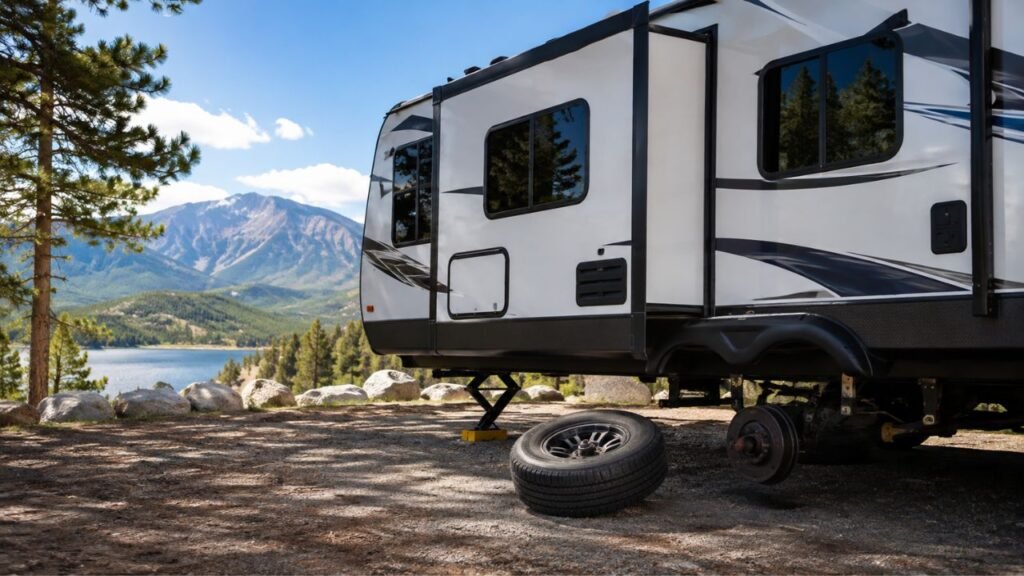
RV trailer brakes need maintenance when you notice weak stopping, pulling, grabbing, grinding, overheating, burning smells, or brake-controller warnings. Delayed braking, locked wheels, unusual hub heat, and grease around the brake assembly can also point to problems that need inspection.
In this guide, I’ll help you recognize those warning signs. We’ll also cover likely causes, maintenance intervals, simple checks, and situations where you should stop towing.
Key Takeaways
- A trailer pushing your tow vehicle can indicate weak trailer braking.
- Pulling during braking often means the brakes are working unevenly.
- Grinding, smoke, or strong burning smells require immediate attention.
- Brake lockup can come from adjustment, contamination, or controller settings.
- One unusually hot hub may indicate brake drag or bearing trouble.
- Controller warnings often involve wiring, grounds, connectors, or brake magnets.
- Grease contamination can seriously reduce electric drum brake performance.
- Regular brake and wheel-end inspections help prevent roadside failures.
What Are the Most Common Signs RV Trailer Brakes Need Maintenance?
Trailer brake problems usually appear through changes in stopping behavior, noise, heat, or electrical response. Some symptoms develop gradually, so knowing how your trailer normally brakes makes problems much easier to recognize.
The Trailer Pushes the Tow Vehicle When Stopping
Your trailer should contribute meaningful braking force during normal stops. If it suddenly feels like the trailer is pushing your truck forward, something may be reducing trailer brake performance.
Possible causes include poor brake adjustment, low controller output, worn brake shoes, weak magnets, or damaged wiring.
You may notice the problem most clearly with the trailer loaded. Your truck may need noticeably more pedal pressure than usual.
Don’t immediately increase brake-controller gain to compensate. A mechanical or electrical problem can remain hidden behind a higher setting.
Stopping Distance Feels Longer Than Normal
A longer stopping distance is another important warning sign.
The change may happen slowly over several trips. That makes it easy to assume the trailer simply feels heavier.
Worn brake linings, excessive shoe-to-drum clearance, electrical resistance, weak magnets, or improper controller settings may reduce braking force.
Pay attention to changes when towing similar loads under similar conditions.
The Trailer Pulls Left or Right While Braking
A trailer that moves noticeably toward one side during braking deserves inspection.
This often means one wheel or one side produces more braking force.
Possible causes include:
- Uneven brake adjustment
- One brake magnet not working
- Damaged wiring
- Contaminated brake shoes
- Sticking brake hardware
- Excessively worn components
However, brakes aren’t the only possibility. Tire problems, bearing trouble, suspension issues, or poor load distribution can sometimes create similar behavior.
The Brakes Grab or Lock Up Too Easily
Trailer brakes should engage firmly without constantly skidding the tires.
If the wheels lock during gentle braking, start by checking your brake-controller gain. Excessive gain can make properly functioning brakes too aggressive.
If the setting is correct, the problem may involve:
- Over-adjusted brakes
- Grease-contaminated linings
- Damaged internal hardware
- Uneven adjustment
- Electrical problems
- Rust after long storage
Repeated lockup shouldn’t be treated as normal trailer behavior.
You Hear Grinding, Scraping, or Squealing
Some brake noises are minor. Grinding and heavy scraping are different.
A grinding sound can mean the brake lining has worn excessively. Damaged springs, hardware, magnets, or drums can also create unusual noise.
If the sound appears mainly while braking, inspect the braking system before continuing a long trip.
Severe metal-on-metal sounds should be treated as an immediate warning.
You Smell Something Burning Near a Wheel
A sharp burning smell after normal towing can indicate excessive heat.
Dragging brakes create constant friction. An overly tight adjustment can produce the same problem.
However, wheel bearings can also create serious heat when damaged or improperly lubricated.
Stop and investigate rather than assuming the smell will disappear.
One Wheel or Hub Is Much Hotter Than the Others
Some warmth around wheel hubs after braking is normal.
A single wheel that is dramatically hotter deserves attention.
Possible causes include:
- A dragging brake
- Over-adjusted brake shoes
- Sticking internal hardware
- A failing wheel bearing
- Insufficient bearing lubrication
- Damaged seals or hub components
Comparing wheels can be more useful than simply deciding whether one hub feels warm.
Never grab a suspected overheated hub with your bare hand.
The Brake Controller Shows a Warning
Modern brake controllers can alert you when they lose connection with the trailer.
A warning doesn’t automatically mean the controller itself has failed.
Common causes include:
- Loose 7-way connector
- Corroded connector terminals
- Damaged brake wiring
- Poor ground connection
- Broken axle wiring
- Shorted brake magnet
- Open electrical circuit
Intermittent warnings are especially important because braking may disappear unexpectedly.
Braking Feels Delayed or Inconsistent
Trailer brakes should respond predictably when you apply the tow vehicle’s brakes.
If engagement sometimes feels strong and sometimes weak, inspect the system.
Intermittent wiring, poor connections, worn magnets, incorrect adjustment, or controller problems may cause inconsistent braking.
This type of fault can become more obvious over rough roads where wiring and connections move.
Grease Appears Around the Brake Assembly
Finding grease inside an electric drum brake assembly is a serious clue.
Wheel bearings need grease, but brake friction surfaces do not.
A damaged grease seal may allow lubricant to reach the brake shoes and drum.
Contamination can cause weak braking, grabbing, unusual smells, or uneven response.
Cleaning the outside of the hub doesn’t solve internal contamination.
The Brakes Drag After You Release Them
Trailer brakes should release once braking force is removed.
If a wheel continues dragging, something may be binding.
Possible causes include excessive adjustment, rusted hardware, mechanical damage, or an electrical problem that keeps voltage going to the brake magnets.
Continued dragging can quickly create dangerous heat.
RV Trailer Brake Warning Signs and What They Usually Mean
The same symptom can have several possible causes. This table gives you a practical starting point without treating any single symptom as a guaranteed diagnosis.
| Warning Sign | Possible Cause | What to Do |
| Trailer pushes tow vehicle | Weak brakes, low gain, poor adjustment | Inspect before heavy or highway towing |
| Trailer pulls to one side | Uneven braking or one brake not working | Check brakes and wheel-end components |
| Wheels lock easily | Gain too high, tight adjustment, contamination | Diagnose before continuing normal towing |
| Grinding or scraping | Worn lining or damaged brake hardware | Stop and inspect |
| Burning smell | Brake drag or overheated wheel end | Stop and investigate |
| Smoke near wheel | Severe overheating or mechanical failure | Stop towing immediately |
| One hub much hotter | Dragging brake or bearing issue | Inspect before continuing |
| Controller disconnect warning | Wiring, connector, ground, or magnet fault | Diagnose electrical system |
| Delayed braking | Wiring, adjustment, controller, or magnet problem | Inspect promptly |
| Grease inside brake assembly | Failed seal and contaminated lining | Service before towing |
| Brake remains engaged | Binding hardware or electrical fault | Stop and inspect |
Which Brake Symptoms Mean You Should Stop Towing Immediately?
Some problems can wait for routine maintenance. Others can quickly turn into wheel damage, brake failure, or loss of control.
Stop towing and investigate if you notice:
- Smoke coming from a wheel
- Strong burning smell
- Severe grinding or metal-on-metal noise
- A wheel remaining locked
- One hub becoming extremely hot
- Very little trailer braking force
- Severe pulling during braking
- Visible damaged brake wiring
- Grease heavily contaminating braking surfaces
- Repeated electrical faults with poor braking
- A wheel that continues dragging after braking
Your tow vehicle’s brakes should never become the backup plan for malfunctioning trailer brakes.
A loaded RV trailer can add thousands of pounds to the combination. That extra weight dramatically increases the work required during an emergency stop.
Is the Problem the Trailer Brakes or the Brake Controller?
A controller problem can make healthy trailer brakes behave badly. However, mechanical and electrical faults inside the trailer can create very similar symptoms.
Signs the Brake Controller Setting May Be the Problem
Start with the controller when all trailer brakes seem to behave similarly.
For example, the gain may be too high when every wheel wants to lock during gentle stops.
Gain may be too low when the trailer brakes work smoothly but don’t contribute enough stopping force.
Controller settings may also need adjustment after changing trailer load.
A nearly empty trailer usually needs different braking force than the same RV near its loaded travel weight.
Signs the Problem Is Probably on the Trailer
Wheel-specific symptoms usually deserve closer inspection at the trailer.
Examples include:
- One wheel repeatedly overheating
- Pulling strongly toward one side
- Grinding from one brake
- One wheel locking before the others
- Intermittent brake connection
- Damaged axle wiring
- Grease contamination inside one hub
Increasing controller gain won’t repair these problems.
Why You Should Check the 7-Way Connector and Ground First
Electric trailer brakes depend on a reliable electrical path.
The 7-way plug sits outside where moisture, dirt, road debris, and corrosion can affect it.
Check for loose terminals, corrosion, damaged wires, and poor connections.
Ground problems can also cause surprisingly inconsistent braking.
If the controller sometimes recognizes the trailer and sometimes doesn’t, connections deserve immediate attention.
What Parts of Electric RV Trailer Brakes Actually Need Maintenance?
Electric drum brakes contain several components that work together. Focusing only on the brake shoes can allow other problems to go unnoticed.
Brake Shoes and Linings
Brake shoes press against the inside of the drum to create friction.
Their friction material gradually wears thinner.
During inspection, look for excessive wear, contamination, missing material, heavy glazing, or serious cracking.
Normal surface appearance can vary between brake designs. Follow the wear specifications for your particular brake assembly.
Brake Magnets
Electric trailer brakes use magnets to initiate braking inside the drum.
The magnet face gradually wears as the system operates.
Damaged magnet wiring can also reduce or completely eliminate braking at one wheel.
A brake can look mechanically intact but still perform poorly because its magnet isn’t receiving proper current.
Brake Drums
Brake drums provide the friction surface for the brake shoes.
Look for excessive scoring, deep grooves, unusual heat damage, cracks, or wear beyond specifications.
A damaged drum can create noise and uneven braking.
Adjusters and Springs
Springs and adjusters keep the brake hardware positioned correctly.
Rust, broken springs, seized adjusters, or damaged hardware can cause poor braking or dragging.
Traditional electric brakes may also require periodic manual adjustment.
Self-adjusting designs handle that function differently.
Wiring and Grounds
Electric brakes are only as reliable as their wiring.
Inspect exposed wiring around the axles and brake backing plates.
Look for:
- Crushed insulation
- Loose connectors
- Corrosion
- Broken wires
- Poor grounds
- Unsupported wiring rubbing against metal
Intermittent electrical faults can disappear while parked and return on the road.
Grease Seals
The seal behind the hub keeps bearing lubricant away from the brakes.
A failed seal can allow grease to reach the brake lining.
Once friction material becomes heavily contaminated, braking performance may become unpredictable.
This is why bearing and brake inspections are often performed together.
Brake Controller and 7-Way Connector
The controller and trailer connector aren’t located inside the brake drum, but they’re still essential parts of the braking system.
A perfectly maintained brake assembly cannot work correctly without proper electrical input.
Include controller operation and connector condition in regular brake checks.
How Can You Check Your RV Trailer Brakes Before a Trip?
You don’t need to disassemble the brakes before every trip. A short functional check can reveal many problems before you reach highway speeds.
- Connect the trailer securely. Make sure the coupler or fifth-wheel hitch is fully connected.
- Inspect the 7-way plug. Look for corrosion, damage, looseness, or dirty contacts.
- Confirm controller connection. Verify that your brake controller recognizes the trailer.
- Check the controller setting. Make sure the gain suits your current trailer load.
- Test manual brake activation. At very low speed in a safe area, confirm the trailer brakes respond.
- Make a gentle test stop. Watch for pulling, grabbing, delay, or unusual noises.
- Inspect visible wiring. Look around the axles for broken or hanging brake wires.
- Check the breakaway system. Follow your breakaway-system manufacturer’s testing instructions.
- Watch for unusual heat. Compare wheel temperatures after a short drive.
- Pay attention to changes. Any new braking behavior deserves investigation.
These checks aren’t a substitute for periodic internal inspection.
They simply help catch problems before they become serious.
How Often Should RV Trailer Brakes Be Inspected and Maintained?
There isn’t one universal schedule for every trailer brake system. Axle design, brake type, mileage, towing conditions, and manufacturer instructions all matter.
| Maintenance Item | Common Service Interval |
| Test brake operation | Before each towing day |
| Test breakaway system | Before regular trips |
| Check traditional manual brake adjustment | Around every 3,000 miles |
| Inspect magnets and electrical operation | Around every 6,000 miles |
| Check controller operation | Around every 6,000 miles |
| Inspect brake linings | Around every 12,000 miles or annually |
| Inspect brake wiring | Around every 12,000 miles or annually |
| Inspect hubs and drums | Around every 12,000 miles or annually |
| Inspect/service applicable wheel bearings | Around every 12,000 miles or annually |
Treat these as general guidance rather than a replacement for your manual.
Some manufacturers specify different intervals.
Frequent mountain travel, heavy loading, water exposure, dusty roads, or long storage periods can justify more frequent inspections.
Do Self-Adjusting RV Trailer Brakes Still Need Maintenance?
Yes. Self-adjusting trailer brakes still need regular inspection and maintenance.
The term self-adjusting only describes how the system maintains brake shoe clearance.
It doesn’t mean the entire brake assembly maintains itself.
Brake shoes can still wear. Magnets still wear. Wiring can become damaged.
Drums can develop grooves, seals can leak, and bearings still require attention.
If your RV uses self-adjusting brakes, you may not need the periodic manual adjustment required by conventional designs.
Follow the instructions for your specific axle and brake assembly.
Can Wheel Bearing Problems Feel Like Trailer Brake Problems?
Yes. Wheel-bearing problems can produce symptoms that feel surprisingly similar to brake trouble.
The bearings, hub, drum, seal, and brake assembly all share the same wheel-end area.
A bearing problem may create:
- Excessive heat
- Grinding or growling
- Wheel drag
- Grease leakage
- Excessive wheel movement
A sound that occurs mainly when braking may point more strongly toward brake components.
A continuous growl that changes with road speed may suggest a bearing problem.
However, roadside symptoms alone aren’t always enough for a reliable diagnosis.
If one wheel is unusually hot, inspect both the brake and bearing system.
Can Brake Adjustment Fix Weak RV Trailer Brakes?
Sometimes.
Traditional electric drum brakes require the correct clearance between the brake shoes and drum.
If that clearance becomes excessive, the brakes may feel weak or delayed.
Proper adjustment can restore performance when everything else remains in good condition.
However, adjustment won’t fix:
- Worn-out brake shoes
- Failed magnets
- Damaged wiring
- Broken hardware
- Badly damaged drums
- Grease contamination
- Failing wheel bearings
If brakes quickly become weak again after adjustment, look deeper for the underlying problem.
Why Do RV Trailer Brakes Overheat on Long Downhill Grades?
Brakes create heat whenever they slow your RV.
On a long downhill grade, continuous braking can create more heat than the system can comfortably release.
Heavy trailers increase that demand.
Over-adjusted or dragging brakes make the situation worse because they’re generating friction even when you’re not intentionally braking.
Use an appropriate tow-vehicle gear and control your speed before it becomes excessive.
Avoid riding the brakes continuously during long descents.
If you smell burning brakes or notice smoke, pull over safely and investigate.
Overheating shouldn’t simply be accepted as part of mountain towing.
Does an Accidentally Pulled Breakaway Switch Damage Trailer Brakes?
It can cause problems if the trailer moves while the breakaway system keeps the brakes applied.
The breakaway switch is designed to activate the trailer brakes if the trailer separates from the tow vehicle.
If the pin is accidentally pulled, the brakes may remain energized.
Driving with them applied can generate excessive heat and potentially damage brake components.
If the breakaway system activates accidentally, stop and inspect the situation before continuing.
Make sure the pin is properly installed and the brakes have released.
You should also test the breakaway system periodically using its manufacturer’s recommended procedure.
When Should RV Trailer Brakes Be Adjusted, Repaired, or Replaced?
Not every brake problem requires new brake assemblies. The correct solution depends on what caused the symptom and the condition of the components.
Adjustment May Be Enough When
Adjustment may solve the problem when conventional drum brakes have developed excessive shoe clearance.
The brakes should still have healthy linings, good magnets, sound drums, and reliable wiring.
If performance doesn’t improve after correct adjustment, further diagnosis is needed.
Repair May Be Needed When
Repair is often appropriate when the problem involves supporting components.
Examples include:
- Damaged brake wiring
- Corroded electrical connections
- Broken springs or hardware
- Faulty grounds
- Leaking grease seals
- Damaged breakaway wiring
Finding the cause before replacing parts can save both time and money.
Replacement May Be Needed When
Replacement becomes more likely when critical components are badly worn or damaged.
Examples include:
- Severely worn brake linings
- Heavily contaminated friction material
- Worn brake magnets
- Broken internal components
- Damaged brake drums
- Heavily corroded brake assemblies
Complete brake assemblies are sometimes replaced rather than rebuilding individual components.
The best choice depends on brake size, condition, labor, and parts availability.
Can You Maintain RV Trailer Brakes Yourself?
Some basic brake checks are reasonable for many RV owners.
You can inspect the connector, watch the brake controller, examine visible wiring, and perform controlled low-speed function tests.
Internal brake service requires more experience.
Removing hubs usually involves wheel bearings, seals, brake hardware, torque procedures, and correct bearing adjustment.
Supporting the trailer incorrectly can also be dangerous.
Never crawl underneath an RV supported only by a jack.
Use properly rated equipment and follow the trailer manufacturer’s approved lifting points.
If you’re uncomfortable working with brakes, bearings, electrical testing, or heavy trailer lifting, professional service is the safer choice.
Final Words
RV trailer brakes rarely go from perfect to completely failed without warning. They usually give you clues first.
Weak stopping, pulling, grabbing, grinding, overheating, controller warnings, and grease contamination all deserve attention.
The most useful thing you can do is learn how your trailer normally feels.
When braking behavior suddenly changes, don’t immediately compensate with more controller gain or a different driving style. Find the reason.
Routine inspection of the brakes, wiring, hubs, bearings, seals, and breakaway system can prevent many problems before they become roadside emergencies.
Related FAQs
How Do I Know If My Travel Trailer Brakes Are Worn Out?
Common signs include weaker braking, longer stopping distances, grinding, pulling, overheating, or repeated brake adjustments. The only reliable way to judge lining and magnet wear is to inspect the brake assembly and compare components with the manufacturer’s wear specifications.
How Often Should RV Trailer Brakes Be Serviced?
Brake operation should be checked before trips, while more detailed inspections are commonly performed at mileage or annual intervals. Many electric drum systems use roughly 3,000-mile adjustment, 6,000-mile electrical, and 12,000-mile internal inspection intervals, but your manufacturer’s schedule should take priority.
Should RV Trailer Brakes Get Hot?
Some warmth is normal because braking converts movement into heat. However, smoke, strong burning odors, or one wheel becoming dramatically hotter than the others can indicate dragging brakes, incorrect adjustment, or bearing problems.
Why Does My Trailer Push My Truck When Braking?
The trailer may not be producing enough braking force. Possible causes include low controller gain, poor brake adjustment, worn shoes, weak magnets, bad wiring, or electrical connection problems.
Why Do My Trailer Brakes Lock Up at Low Speed?
Low-speed lockup can happen when controller gain is too high or the brakes are adjusted too tightly. Contaminated linings, damaged hardware, or uneven brake operation can also make one or more wheels grab.
Why Does My Trailer Pull to One Side When Braking?
Pulling usually means braking force isn’t equal between wheels. Uneven adjustment, a failed magnet, contaminated lining, damaged wiring, or sticking hardware may be responsible, although tires, bearings, suspension, and load distribution should also be considered.
Can a Bad Wheel Bearing Cause Trailer Brake Problems?
Yes. A failing bearing can create heat, drag, looseness, noise, or seal damage. A damaged seal may also allow bearing grease to contaminate the brake shoes, reducing braking performance.
Do Self-Adjusting Trailer Brakes Need Servicing?
Yes. Self-adjusting brakes still require inspection of the shoes, magnets, drums, wiring, seals, bearings, and hardware. They simply reduce or eliminate the manual adjustment required by traditional drum brake designs.
Can a Bad Brake Controller Cause Weak Trailer Brakes?
Yes. Incorrect gain, controller failure, or poor controller output can reduce braking. However, weak brakes can also come from trailer wiring, grounds, magnets, adjustment, or worn mechanical components.
Should I Tow an RV With a Trailer Brake Warning?
Don’t continue normal towing when braking is clearly reduced, unpredictable, grinding, locking, smoking, or overheating. Diagnose the problem first, especially before highway travel, mountain driving, or towing a heavily loaded RV.

Gregory Allen covers outdoor RV camping, essential gear, and travel preparation. His reviews are based on real conditions, not spec sheets alone. He helps RVers choose equipment that works reliably in everyday outdoor use.