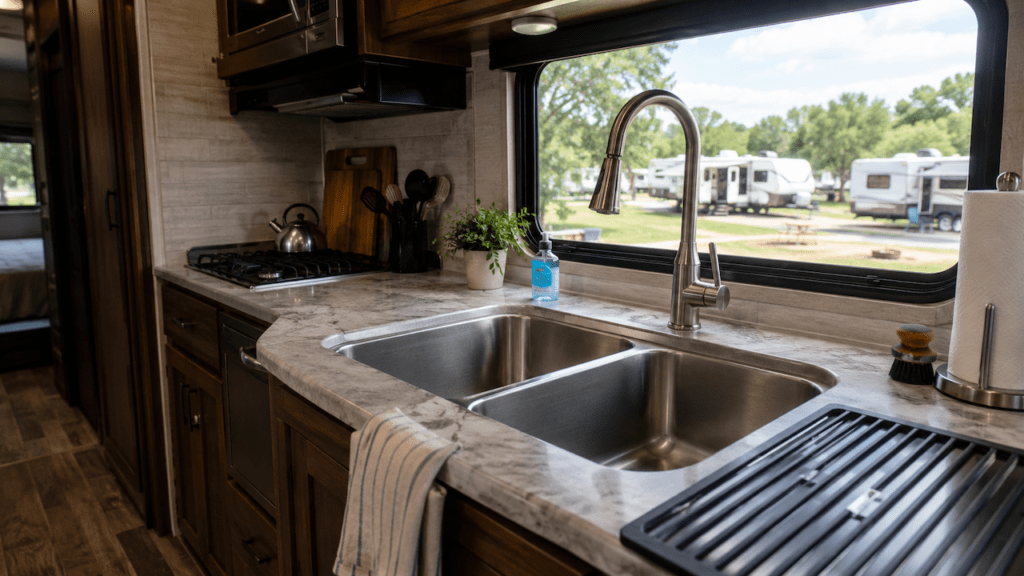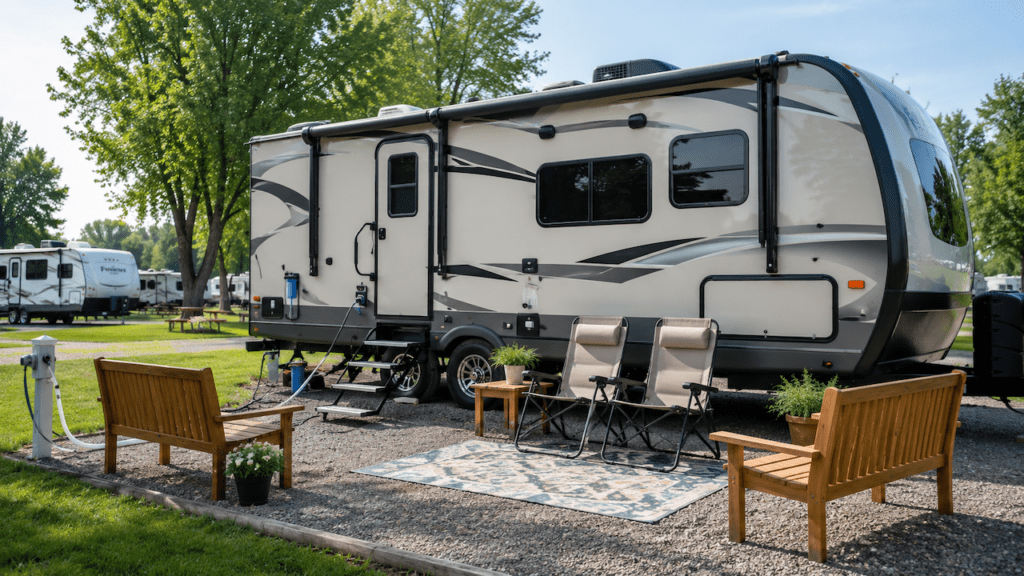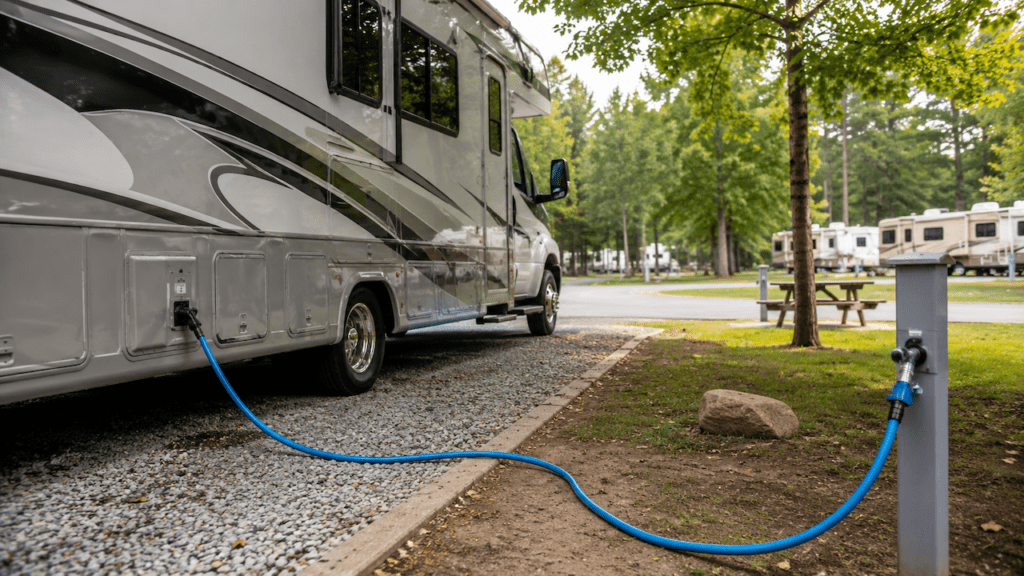
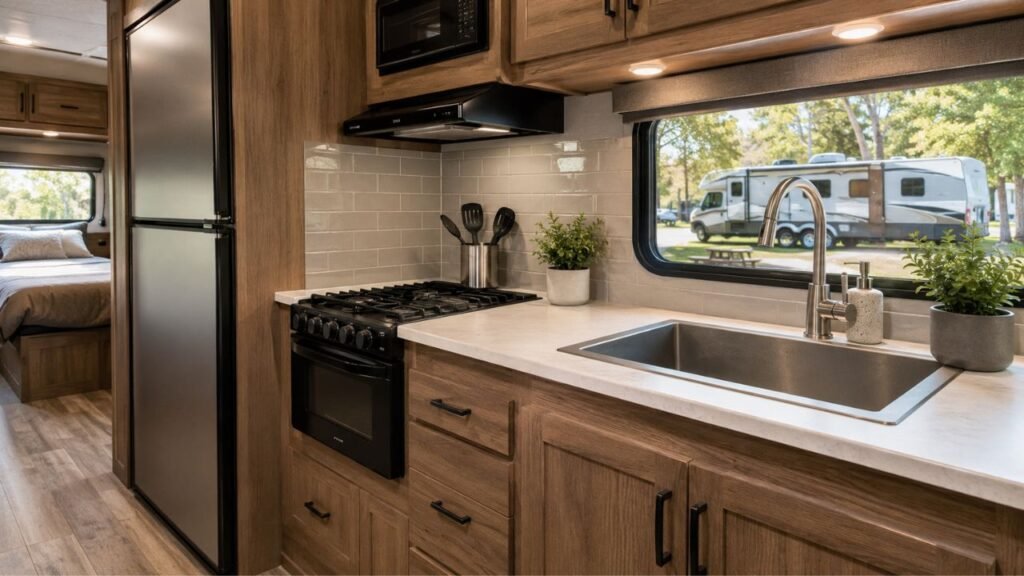
Before every RV trip, check your refrigerator, stove, propane supply, kitchen plumbing, sink drainage, safety detectors, and cabinet latches. You should also remove loose items and inspect for leaks, odors, unusual burner flames, or anything else that could become a problem while traveling.
You do not need to deep-clean or service every kitchen system before leaving home. I’ll walk you through the quick checks that actually matter, along with the maintenance jobs you can save for another day.
Key Takeaways
- Pre-cool your RV refrigerator before loading perishable food.
- Check refrigerator and freezer travel latches before driving.
- Test each stove burner and confirm the propane supply is adequate.
- Stop using propane appliances if you notice a propane odor.
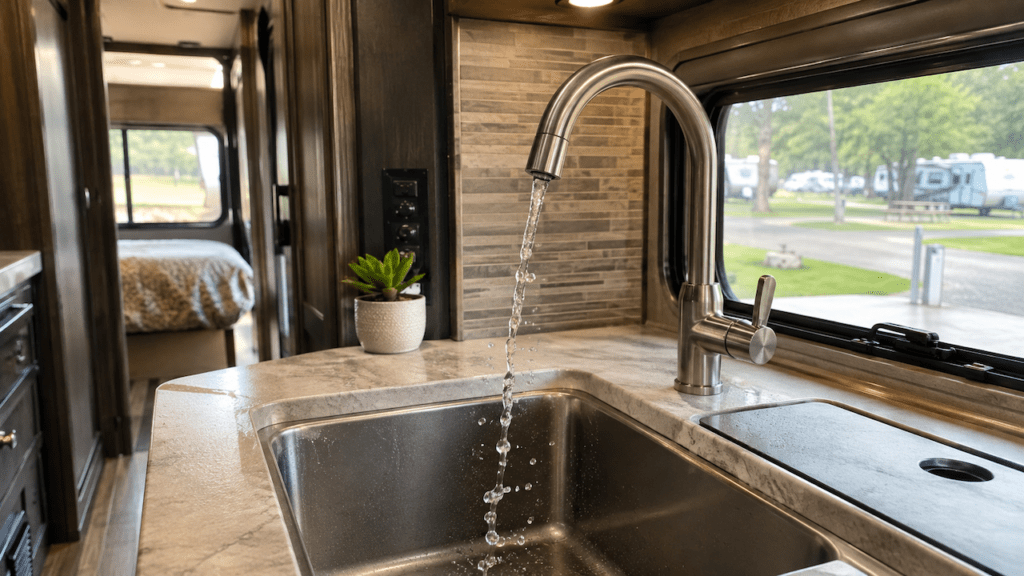
- Run hot and cold water through the kitchen faucet.
- Inspect under-sink plumbing while the water is running.
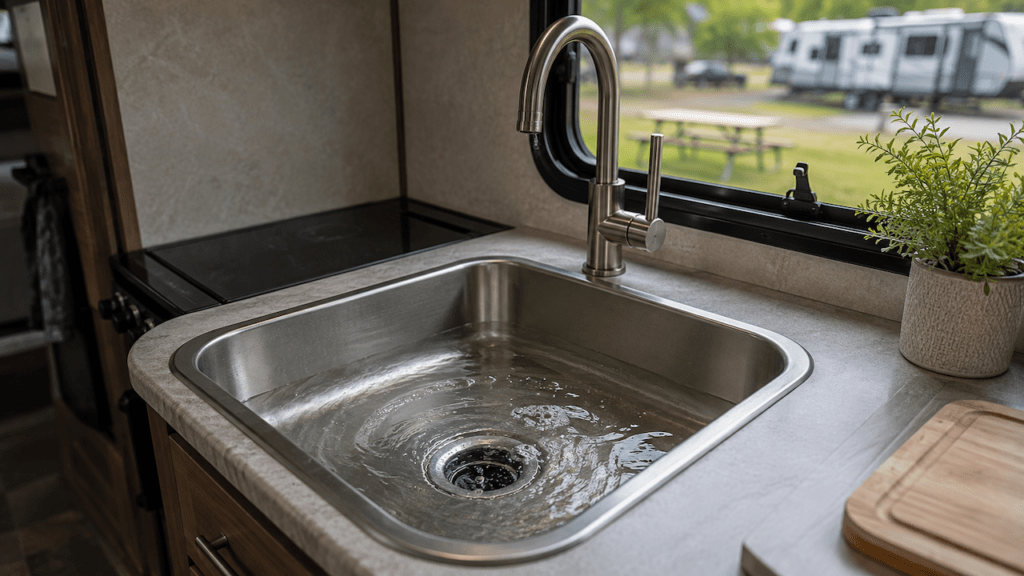
- Check that the sink drains normally into the gray tank.
- Test smoke and LP/CO safety alarms before departure.
- Secure cabinets, drawers, cookware, glassware, and countertop appliances.
- A full freshwater-system sanitization is usually not required before every trip.
RV Kitchen Maintenance Checklist Before Every Trip
A pre-trip kitchen check does not need to take all morning. Focus on systems that can leak, fail, spill, smell, or move while your RV is on the road.
| Kitchen Area | What to Check Before Every Trip | Warning Sign |
| Refrigerator | Cooling, temperature, seals, travel latch | Warm interior, ammonia odor, damaged latch |
| Stove and oven | Propane supply, ignition, burner operation | Gas odor, soot, abnormal flame |
| Kitchen faucet | Hot and cold flow, pressure, pump operation | Persistent sputtering or weak flow |
| Under-sink plumbing | Supply lines, fittings, P-trap, drain | Drips, moisture, swollen cabinet floor |
| Sink drainage | Drain speed and gray-tank capacity | Backup, slow draining, strong odor |
| Range hood | Fan operation, vent, grease buildup | Fan failure or heavy grease |
| Microwave | Door latch and loose components | Loose turntable or damaged latch |
| Cabinets | Door and drawer latches | Doors opening with a light pull |
| Safety equipment | Smoke alarm, LP/CO detector, extinguisher | Failed test or expired equipment |
You can use this table as your quick departure checklist. The sections below explain what I would look at more closely.
Check the RV Refrigerator Before Loading Food
Your refrigerator deserves attention before groceries go inside. Finding a cooling problem at home is much easier than discovering warm milk after reaching your campsite.
Pre-Cool the Refrigerator Before the Trip
Turn the refrigerator on several hours before you plan to load it.
For many RV refrigerators, starting it the night before works well. Some absorption refrigerators can take quite a while to stabilize, especially during hot weather.
Do not judge the refrigerator only by touching the shelves. Place an appliance thermometer inside and confirm that the refrigerator is reaching a safe temperature.
Pre-cool your food at home when possible. Loading a warm refrigerator with warm drinks and groceries makes it work much harder.
Make Sure the Refrigerator Is Actually Cooling
Look beyond the power light.
Check the refrigerator compartment and freezer. Watch for warning lights, error codes, unusual sounds, or unexpected shutdowns.
If your refrigerator can operate from more than one energy source, make sure the mode you intend to use is working correctly.
An absorption refrigerator, compressor refrigerator, and residential refrigerator do not operate exactly the same way. Follow the instructions for the refrigerator installed in your RV.
Inspect the Refrigerator Door Seal and Travel Latch
Run your eyes around the rubber door gasket.
Look for:
- Torn sections
- Dirt buildup
- Flattened areas
- Loose corners
- Gaps around the door
A damaged seal allows warm air and moisture to enter.
Next, close the refrigerator and freezer doors firmly. Confirm that their travel latches actually hold.
Give each door a gentle pull after locking it. You do not want the refrigerator opening during a hard turn.
Clean Spills and Remove Old Food
You do not need a deep refrigerator cleaning before every trip.
A quick cleanup is enough.
Remove expired food, old leftovers, and anything that has started smelling. Wipe sticky spills before they dry onto shelves.
Pay extra attention to containers that could leak while bouncing down the road.
A clean refrigerator is also easier to inspect. You are more likely to notice moisture or cooling problems when old spills are not hiding them.
Pack the Refrigerator for Airflow and Travel
Avoid stuffing every inch of the refrigerator.
Cold air still needs space to circulate around the food.
Keep heavy bottles and jars from pressing against the door. If they shift while traveling, they can place extra force on the latch.
I also like to keep fragile containers separated. A small nonslip mat or soft divider can help reduce movement.
Test the RV Stove, Oven, and Propane Supply
Your cooking appliances only need a short functional check before departure. You are looking for normal ignition, steady operation, and obvious signs of trouble.
Check That You Have Enough Propane
Start by checking how much propane you have available.
It is easy to blame the stove when the real issue is simply an empty cylinder or closed valve.
Also inspect the visible parts of your propane setup.
Look for obvious damage around:
- Hoses
- Regulators
- Connections
- Cylinder mounting points
Do not loosen fittings just to inspect them.
If something looks cracked, badly corroded, or damaged, have it corrected before depending on the appliance.
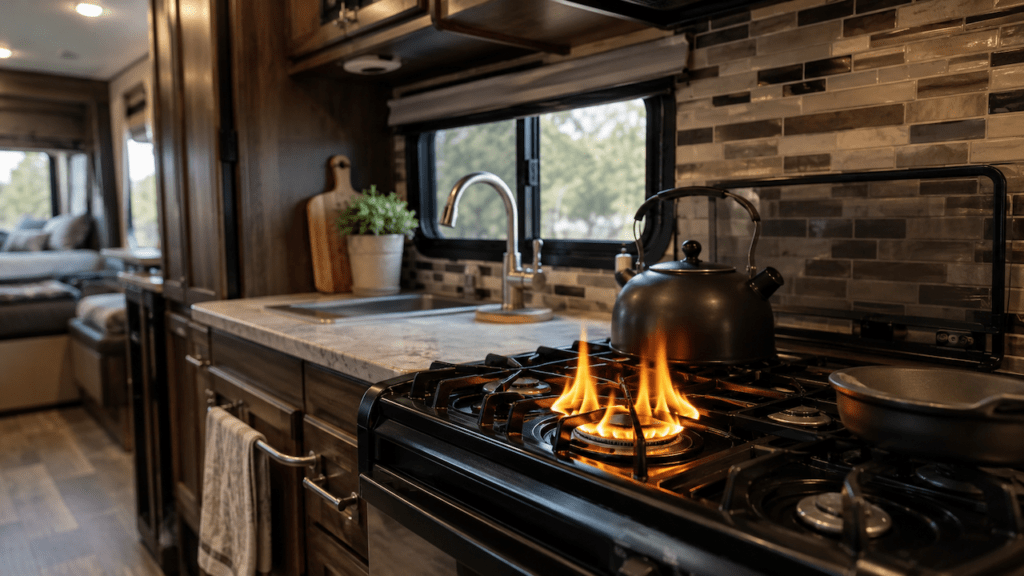
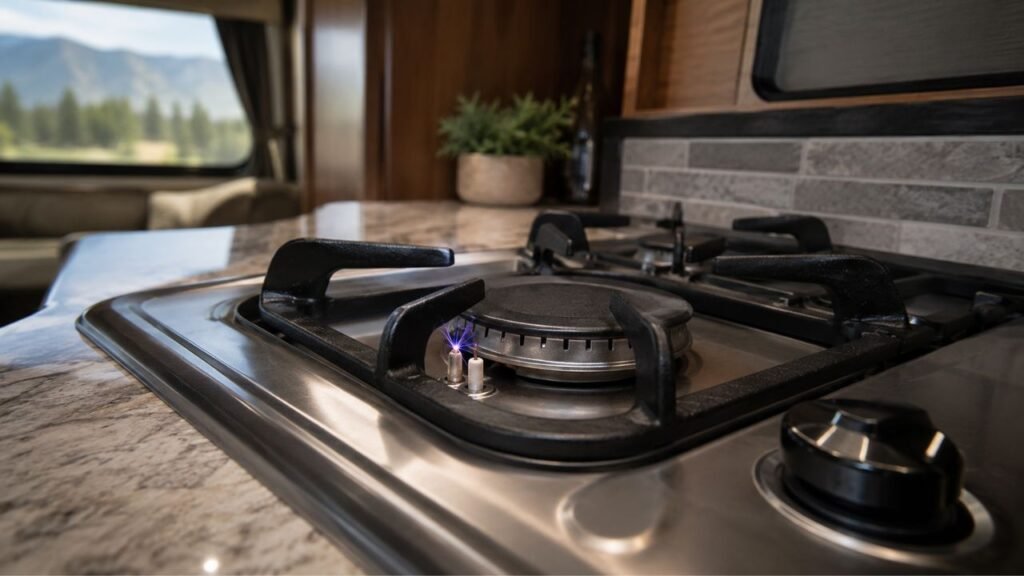
Test Each Stove Burner and the Igniter
Light each burner briefly.
You want to confirm that:
- The igniter sparks normally.
- Each burner lights without excessive delay.
- The flame remains stable.
- The control knob operates smoothly.
- The burner shuts off completely.
If one burner behaves differently from the others, look for simple problems such as food debris around the burner cap or ports.
Avoid poking large objects into burner openings. Damaging or enlarging a burner port can create a bigger problem.
Watch the Burner Flame for Trouble
A healthy propane burner usually produces a mostly blue, stable flame once it has settled.
The exact appearance can vary slightly by appliance.
Pay attention if you see:
- Persistent yellow or orange flames
- Heavy soot
- Flame lifting away from the burner
- Repeated popping
- Uneven flame around the burner
- A burner that repeatedly goes out
A brief color change caused by dust or cooking residue is different from an ongoing abnormal flame.
If the problem continues after basic cleaning, have the appliance inspected rather than adjusting gas components yourself.
Never Continue Testing If You Smell Propane
A propane smell is not a normal maintenance issue.
Stop using the stove and other propane appliances. Avoid creating flames, sparks, or switching electrical equipment unnecessarily.
If it is safe to do so, turn off the propane supply and leave the RV. The source should be identified and repaired before you use the propane system again.
Do not repeatedly ignite a burner to determine where the smell comes from.
Inspect the RV Kitchen Sink and Plumbing for Leaks
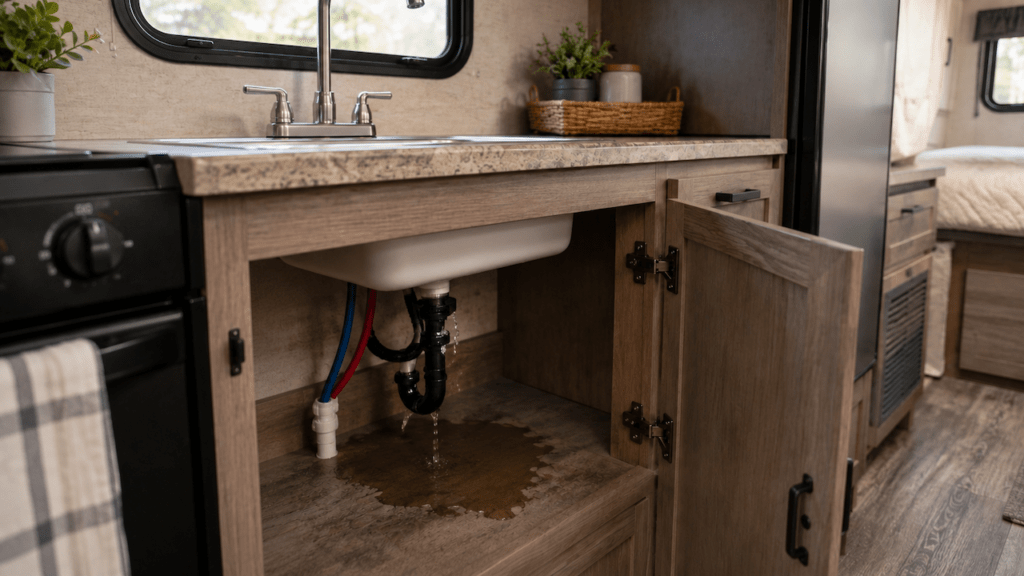
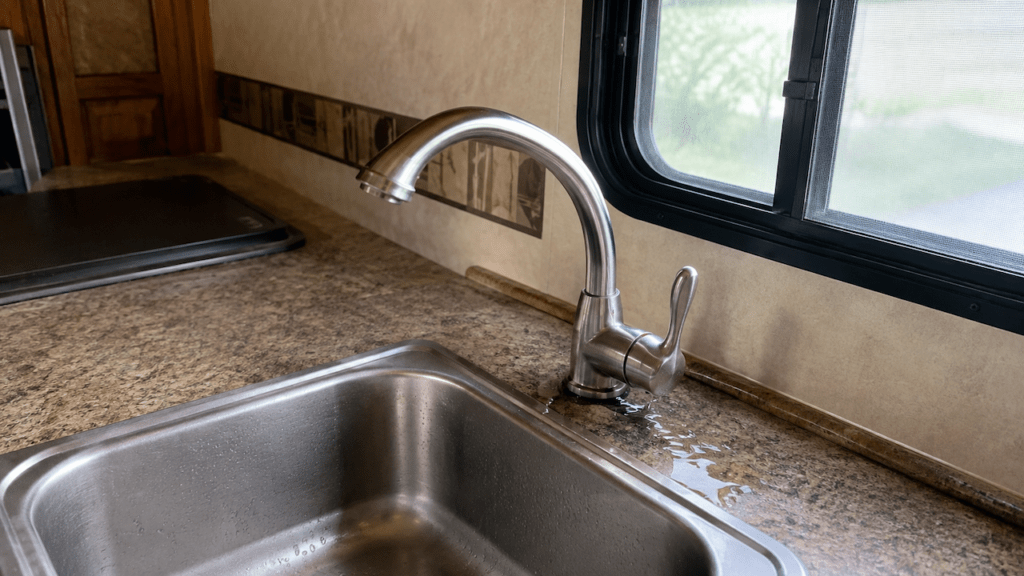
A tiny plumbing leak can quietly damage cabinets, flooring, and wall panels. I recommend checking the kitchen plumbing while water is actually moving through the system.
Run Both Hot and Cold Water
Turn on the kitchen faucet and test both sides.
Check for:
- Normal water pressure
- Steady flow
- Unusual pump sounds
- Persistent sputtering
- Delayed hot-water flow
- Water pump cycling strangely
A little air after storage or reconnecting water may clear quickly.
Persistent sputtering can point to air entering the plumbing, a loose connection, low water, or another water-system problem.
If your water pump sounds very different than usual, do not ignore it.
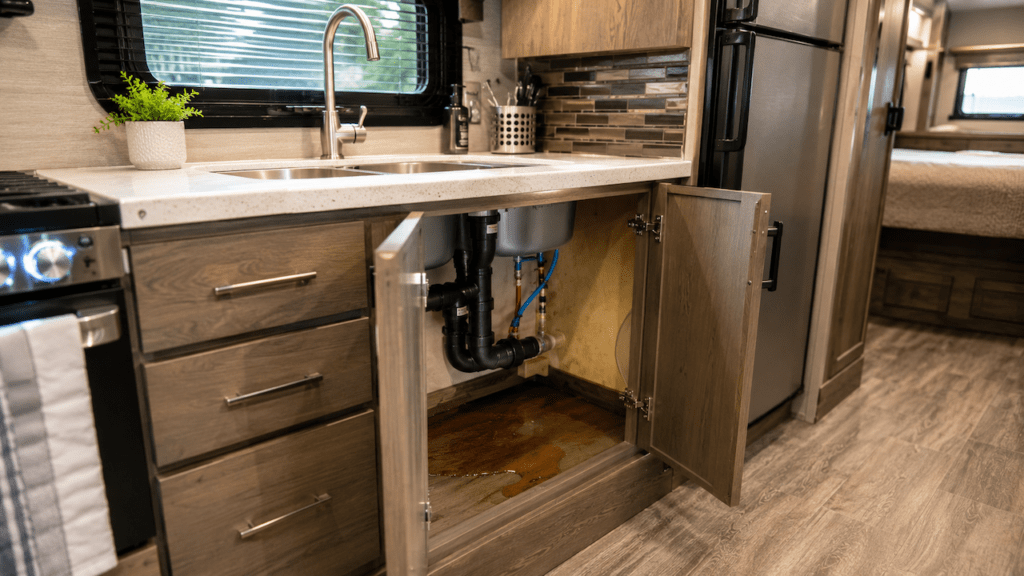
Look Under the Kitchen Sink While Water Is Running
Open the cabinet doors and use a flashlight.
Watch the plumbing while the faucet runs.
Inspect around:
- Faucet supply connections
- Flexible water lines
- Pipe fittings
- P-trap
- Drain basket
- Drain joints
- Water-filter connections
Run enough water through the drain to expose small leaks.
Some drain leaks only appear when the sink is full or water is flowing quickly. Simply looking under a dry sink may not reveal them.
Touch suspicious areas with a dry paper towel. It can make tiny amounts of moisture easier to detect.
Check for Dampness, Swelling, or Musty Odors
Do not only look for dripping water.
Your RV may already be showing early signs of a slow leak.
Look for:
- Damp cabinet flooring
- Dark stains
- Soft wood
- Swollen particleboard
- Peeling covering material
- Rust around hardware
- Musty odors
If the cabinet feels damp, find the cause before covering the area with stored kitchen supplies.
Moisture trapped inside an RV can cause much more damage than the original fitting would have cost to repair.
Check Sink Drainage and Gray-Tank Capacity
Fill the sink with a small amount of water, then let it drain.
The water should move away normally.
Pay attention to:
- Slow drainage
- Water returning into the sink
- Persistent gurgling
- Strong gray-tank odor
- Drainage that changes as the tank fills
Check your gray-tank level before traveling.
You do not necessarily need a completely empty gray tank for every short move. However, carrying unnecessary wastewater adds weight and reduces the capacity available once you arrive.
If you have easy access to an approved dump station before your trip, starting with more available gray-tank capacity is usually convenient.
Should You Sanitize RV Kitchen Water Lines Before Every Trip?
No. A complete freshwater-system sanitization normally does not need to be performed before every RV trip.
There is an important difference between checking your water system and sanitizing your entire freshwater system.
Before an ordinary trip, run water through the kitchen faucet. Check the water’s appearance, smell, pressure, and flow. Look under the sink for leaks while the system is pressurized.
Full sanitization is a more involved maintenance task.
It is commonly done after extended storage, after winterization, when preparing for a camping season, after suspected contamination, or according to your RV manufacturer’s maintenance schedule.
If the water has an unusual odor, strange taste, discoloration, or questionable storage history, do not simply assume a quick flush makes it safe.
Deal with the underlying water-quality issue before using that water for drinking or cooking.
Check the Microwave, Range Hood, and Kitchen Ventilation
Small kitchen appliances can create surprisingly large messes while traveling. Spend another minute checking the microwave, range hood, and anything mounted above the stove.
Secure the Microwave Turntable and Door
Open your microwave and check the glass turntable.
If it moves easily, secure it according to your RV or appliance instructions. Some owners remove the glass tray and store it safely during travel.
Make sure the microwave door closes and latches normally.
Never place heavy loose objects inside the microwave unless they are properly secured.
The microwave itself should also feel firmly mounted.
Check the Range Hood Fan and Vent
Turn the range hood fan on briefly.
You want to confirm that it starts normally and moves air.
Inspect the filter for grease buildup.
You do not need to deep-clean the filter before every trip. However, if it is visibly greasy, cleaning it before cooking again is worthwhile.
If your RV has an exterior range-hood vent flap, make sure it is operating as designed.
Some RV vents have travel locks. Follow your vent manufacturer’s instructions before driving.
Remove Excess Grease Around Cooking Appliances
Wipe away obvious grease around the cooking area.
Pay attention to:
- Stove grates
- Burner surfaces
- Backsplash
- Range hood
- Nearby wall panels
Heavy grease can produce smoke and odors the next time you cook.
Removing it regularly is much easier than waiting for several trips’ worth of buildup.
Test Kitchen-Related Safety Equipment
Your RV kitchen combines heat, electricity, propane, and water in a very small space. Give the nearby safety equipment a quick check before departure.
- Test the smoke alarm using its test button.
- Test the RV’s LP/CO detector as instructed by its manufacturer.
- Check that detector openings are not covered.
- Make sure your fire extinguisher remains accessible.
- Check the extinguisher’s condition and service status.
- Look for damaged cords on countertop appliances.
- Check for loose, melted, or discolored plugs.
- Verify kitchen GFCI protection is functioning when appropriate.
- Never cover a detector because nuisance alarms are bothering you.
A failed safety detector should be corrected before you depend on propane appliances inside the RV.
Secure the RV Kitchen for Travel
A perfectly working kitchen can still become a mess if everything inside it moves. Secure the kitchen only after your appliance and plumbing checks are complete.
- Latch every kitchen cabinet.
- Close and secure all drawers.
- Store heavy cookware in lower cabinets.
- Keep glass items from hitting each other.
- Remove loose items from countertops.
- Secure coffee makers and small appliances.
- Secure or remove the microwave turntable.
- Lock refrigerator and freezer doors.
- Secure removable sink covers.
- Secure stove covers correctly.
- Keep heavy objects away from stove controls.
- Secure the trash can.
- Do not leave knives or utensils loose.
- Give cabinet doors a light pull after latching them.
One badly placed cast-iron pan can do impressive damage during an emergency stop.
I would rather spend two extra minutes securing everything than repair a broken cabinet door later.
What RV Kitchen Maintenance Does Not Need to Be Done Before Every Trip?
Not every maintenance job belongs on your departure-day checklist. Knowing what can wait keeps your routine short enough that you will actually follow it.
| Maintenance Task | Better Time to Do It |
| Full freshwater sanitization | Periodically, after storage, contamination, or as recommended |
| Deep refrigerator cleaning | Periodically or when needed |
| Refrigerator defrosting | When frost buildup becomes excessive |
| Professional propane pressure testing | Service interval or when a problem appears |
| Burner disassembly | When cleaning or servicing is required |
| Water-filter replacement | Manufacturer’s replacement interval |
| Deep gray-tank cleaning | Periodically or when odors and buildup develop |
| Range hood filter deep cleaning | When grease buildup requires it |
| Full appliance servicing | Manufacturer’s maintenance schedule |
| Plumbing fitting replacement | When leaking, damaged, or deteriorated |
Your pre-trip goal is simple: inspect, test, and secure.
You do not need to dismantle half the kitchen every time you leave for a campground.
RV Kitchen Problems You Should Fix Before Leaving
Some kitchen problems deserve more than a note on your future maintenance list. These are issues I would address before beginning the trip.
- A noticeable propane odor
- A failed LP/CO detector
- A failed smoke alarm
- An active plumbing leak
- Water soaking cabinet material
- A refrigerator that will not cool
- An ammonia-like odor near an absorption refrigerator
- Persistent abnormal stove flames
- Heavy soot around a burner
- A refrigerator door that will not latch
- Cabinets that repeatedly open
- A sink that backs up unexpectedly
- Melted electrical plugs
- Burning electrical odors
- Hot or badly discolored outlets
- Damaged propane hoses or connections
These problems can become harder to handle once you are away from home.
If something makes you question whether an appliance is safe, leave it off until the cause is identified.
How Long Should an RV Kitchen Pre-Trip Check Take?
For an RV that is already maintained well, the hands-on kitchen inspection can usually be completed in about 10 to 15 minutes.
The refrigerator is the exception because cooling should begin much earlier.
Start the refrigerator several hours before loading food. Many RV owners turn it on the night before departure so there is enough time to confirm proper cooling.
The actual final walk-through should remain simple.
Run the faucet, look underneath, test the stove, check the refrigerator, test your detectors, and secure everything.
If your RV has been stored for months, recently repaired, winterized, or left unused through extreme weather, give yourself more time. That situation calls for more than a routine pre-trip check.
Final Words
RV kitchen maintenance before every trip is mostly about catching small problems while they are still easy to fix. A loose drain fitting, weak refrigerator latch, or unusual burner flame may seem minor in your driveway but can become a much bigger inconvenience at a campsite.
Keep your routine simple: cool it, run it, inspect it, test it, and secure it. Once those checks become a habit, you can prepare your kitchen quickly without turning every departure into a full maintenance day.
Related FAQs
Should I Sanitize My RV Water System Before Every Trip?
No. You should check water flow, smell, appearance, and plumbing before ordinary trips, but full freshwater sanitization is normally performed periodically, after storage, after contamination, or according to your RV manufacturer’s recommendations.
How Early Should I Turn On My RV Refrigerator Before a Trip?
Turn the refrigerator on several hours before loading food, with overnight pre-cooling being practical for many RV refrigerators. Cooling times vary by model and outside temperature, so follow your refrigerator manufacturer’s instructions.
Should I Empty My RV Gray Tank Before Every Trip?
Not necessarily, but starting with plenty of available gray-tank capacity is convenient and reduces unnecessary carried weight. Dump wastewater only at an approved location and consider your trip length before deciding how much capacity you need.
Should I Test My RV Propane Detector Before Every Trip?
Yes. A quick test helps confirm that the LP/CO detector is powered and responding. Follow the detector manufacturer’s testing procedure and replace or service a detector that does not pass its test.
Why Should I Check Under My RV Kitchen Sink Before Traveling?
Small leaks often begin around faucet lines, drain fittings, filters, or the P-trap. Checking while water is running can expose moisture before it damages cabinets, flooring, or surrounding wall material.
Should I Test Every RV Stove Burner Before Leaving?
Yes. Briefly testing each burner can reveal ignition problems, poor flame quality, blocked burner ports, or a propane-supply issue before you reach your destination.
How Do I Keep RV Kitchen Cabinets From Opening While Driving?
Use properly adjusted travel latches, avoid overloading cabinet doors, store heavy cookware low, and give each cabinet a gentle pull after closing it. Secondary travel locks can also help if the factory latches are weak.
What Temperature Should My RV Refrigerator Reach Before Loading Food?
For food safety, your refrigerator should generally be around 40°F or colder before loading perishables. Use an appliance thermometer and follow the temperature guidance provided by your refrigerator manufacturer.
Why Does My RV Kitchen Faucet Sputter Before a Trip?
Brief sputtering can happen when air enters the plumbing after storage or reconnecting to water. If it continues, check water levels, pump operation, faucet aerator condition, and plumbing connections for air leaks or restrictions.
What Should I Do If My RV Kitchen Smells Like Propane?
Stop using propane appliances immediately. Avoid flames and unnecessary sparks, shut off the propane supply if it is safe to do so, leave the RV, and have the system inspected before using propane appliances again.

Gregory Allen covers outdoor RV camping, essential gear, and travel preparation. His reviews are based on real conditions, not spec sheets alone. He helps RVers choose equipment that works reliably in everyday outdoor use.