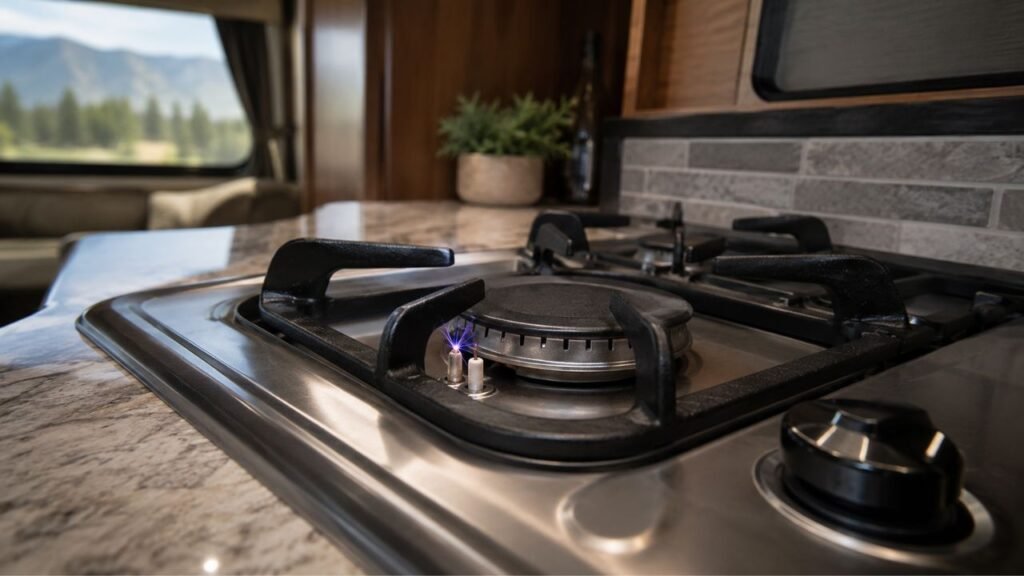
If your RV stove keeps clicking but will not light, the igniter is trying to create a spark, but the burner is not successfully igniting. Common causes include an empty or closed propane tank, air in the propane line, a wet or dirty igniter, clogged burner ports, poor burner alignment, or an ignition-system problem.
The good news is that many causes are simple to identify. I’ll walk you through the safest checks first, then show you when the problem needs professional attention.
Key Takeaways
- Clicking means the stove is attempting to create ignition.
- One failed burner usually points to a local burner problem.
- If every burner fails, check the propane supply first.
- A visible spark with no flame often suggests gas-flow trouble.
- No visible spark may indicate an electrode or ignition issue.
- Moisture, grease, and food debris can prevent proper ignition.
- Stop immediately if you smell a strong or persistent propane odor.
What Does It Mean When an RV Stove Clicks but Won’t Light?
The clicking sound usually means your stove’s ignition system is working at least partially. It is trying to create the spark needed to ignite propane.
For the burner to light, three things must happen correctly. Propane must reach the burner, the igniter must create a usable spark, and that spark must reach the propane-air mixture.
If any part of that process fails, you may hear repeated clicking without getting a flame.
Keep in mind that RV stoves use different ignition systems. Some use a manual piezo igniter, while others use electronic ignition powered by the RV’s 12-volt system.
That difference matters when you start troubleshooting.
Quick RV Stove Clicking Troubleshooting Chart
Before taking anything apart, look at what the stove is actually doing. The symptoms often tell you which part of the system needs attention.
| What You Notice | Most Likely Problem Area | What to Check First |
| All burners click but none light | Propane supply | Tank, valve, regulator, other LP appliances |
| Only one burner will not light | Burner or electrode | Burner ports, dirt, moisture, alignment |
| Clicking but no visible spark | Ignition system | Electrode, wiring, ignition module |
| Visible spark but no flame | Gas delivery | Propane supply and burner ports |
| Burner lights with a long lighter | Ignition problem | Electrode position or spark strength |
| Burner will not light manually | Gas-flow problem | Propane supply, burner passage, valve |
| Problem started after propane refill | Air in propane line | Propane supply and normal lighting procedure |
| Burner lights but quickly goes out | Flame-safety problem | Thermocouple or flame sensor, if equipped |
Use this chart as a starting point rather than replacing proper inspection. The safest troubleshooting path depends on what your specific stove is doing.
Why Does My RV Stove Keep Clicking Without Lighting?
Several problems can create the same clicking symptom. The easiest way to find the cause is to start with propane supply, then move toward the burner and igniter.
Propane Tank Is Empty or the Valve Is Closed
Start with the simplest possibility.
Check that your RV has propane available and the cylinder valve is open. If you have two propane cylinders, also check the automatic changeover selector.
A closed appliance shutoff valve can also stop propane from reaching the stove.
If none of the burners will light, propane supply should be your first concern.
Air Is Trapped in the Propane Line
Air can enter the propane system after replacing a cylinder. It can also happen after storage or propane-system service.
When air reaches the stove before propane does, the igniter may keep clicking without producing a flame.
Do not leave an unlit burner flowing for an extended period. Unburned propane can accumulate inside the RV.
Instead, follow the lighting procedure listed in your stove’s manual. If several safe attempts fail, stop and investigate the propane supply.
The Burner or Igniter Is Wet
Did the problem begin immediately after cleaning?
Moisture around the electrode or burner can interfere with ignition. A recent boil-over can create the same problem.
Turn the stove off and let everything cool completely.
Wipe visible moisture with a dry cloth. Then allow the burner and igniter area to air-dry before trying again.
Avoid soaking RV cooktop components during normal cleaning.
Grease or Food Is Blocking the Burner Ports
RV stove burners have small openings where propane exits.
Grease, dried food, crumbs, and other debris can block those openings. If gas cannot exit near the spark electrode, the burner may never ignite.
Turn everything off and allow the stove to cool.
Clean removable burner parts according to the manufacturer’s instructions. A soft brush is usually safer than forcing hard objects into burner openings.
Never enlarge burner ports or modify the propane orifice.
The Burner Head or Cap Is Out of Position
Some RV cooktops have removable burner heads or caps.
If one becomes slightly crooked after cleaning, gas may not flow toward the igniter correctly. Road vibration can sometimes shift loose components as well.
Check that the removable parts sit flat and properly centered.
Compare the problem burner with another burner that works normally.
The Spark Electrode Is Dirty or Misaligned
The spark electrode is usually a small ceramic-insulated component beside the burner.
Grease, carbon, or food residue can interfere with the spark. The spark may also jump to the wrong location if the electrode moves.
Turn the stove off before inspecting it.
Look for heavy buildup around the electrode tip. Also check whether the spark appears close to the burner ports.
Avoid aggressively bending the electrode. Small ceramic parts can crack easily.
The Igniter Electrode or Ceramic Insulator Is Damaged
Sometimes you hear clicking even though the spark is not reaching the burner.
A cracked ceramic insulator can allow electricity to jump somewhere else. The result can be a weak, hidden, or poorly positioned spark.
Watch the problem burner during an ignition attempt.
If another burner shows a bright spark while this one does not, the electrode or ignition lead deserves closer attention.
Replacement may be needed if the ceramic is cracked.
Propane Pressure Is Too Low
Your stove needs proper propane pressure to operate correctly.
A weak regulator, supply restriction, or propane-system problem can reduce gas flow. You may notice small flames on other appliances as well.
Low pressure becomes more likely when several burners or LP appliances act strangely.
Do not adjust the RV propane regulator yourself.
Proper regulator diagnosis requires correct pressure-testing equipment. This is usually a job for an RV technician.
The Electronic Ignition System Has a Power or Wiring Problem
Some RV cooktops use electronic ignition rather than manual piezo ignition.
These systems may rely on the RV’s 12-volt power supply. A weak battery, loose connection, damaged wire, or faulty ignition module can interfere with sparking.
However, do not assume every clicking stove needs battery power.
Many RV stoves use mechanical ignition instead.
Check your stove’s model and owner’s manual before troubleshooting electrical components.
How Do I Fix an RV Stove That Clicks but Won’t Light?
You can narrow the problem quickly by checking things in the right order. Start with safety, then determine whether propane or ignition is missing.
Step 1: Stop If You Smell Strong Propane
A faint propane smell during a brief failed ignition attempt can happen. A strong or lingering smell is different.
Turn every burner control off immediately.
If the propane smell continues, shut off the propane supply when safe. Ventilate the area and avoid creating sparks or flames.
Do not operate electrical switches around a suspected propane leak.
Have the system inspected before using the stove again.
Step 2: Check Whether Other Burners Work
Try another burner using the normal lighting procedure.
If other burners work normally, your propane tank and main regulator are probably supplying gas.
That moves your attention toward the failed burner.
If no burners work, look at the common propane supply first.
This one check can save a lot of unnecessary troubleshooting.
Step 3: Check Another Propane Appliance
If every stove burner fails, check whether another LP appliance operates normally.
Your furnace, water heater, or refrigerator may help confirm whether propane is reaching the RV’s appliance system.
If several propane appliances fail together, the stove may not be the real problem.
Look toward the cylinder, shutoff, regulator, or common propane supply.
Step 4: Watch the Electrode While the Stove Clicks
You should be able to see where the spark occurs on many cooktops.
Turn the knob normally and watch the electrode.
A strong spark jumping near the burner suggests the ignition system is at least producing a usable spark.
If gas is also reaching the burner, ignition should happen quickly.
If you hear clicking but see no useful spark, inspect the electrode and ignition system.
Step 5: Clean and Dry the Burner
Turn everything off and let the cooktop cool completely.
Remove only the components your manufacturer allows you to remove.
Clean grease and food from the burner surface. Clear loose debris from the burner ports without changing their size.
Dry every part thoroughly before reassembly.
Then reinstall the burner components in their correct positions.
Step 6: Check Burner and Electrode Alignment
Compare the problem burner with one that lights normally.
Look for obvious differences in burner position, electrode spacing, or component alignment.
The spark should occur close enough to the propane-air mixture for ignition.
If something looks bent, cracked, or damaged, replacement is safer than forcing it back into position.
Step 7: Retry Using the Correct Lighting Procedure
After cleaning and checking the burner, try again.
Most properly working burners should ignite within a few seconds.
Do not repeatedly hold gas flowing while the burner remains unlit.
Turn the control off after an unsuccessful attempt. Allow any released propane to disperse before another attempt.
Always follow your specific stove manufacturer’s lighting instructions.
Can I Manually Light an RV Stove If the Igniter Keeps Clicking?
Many RV propane cooktops can be manually lit when their manufacturer permits it.
A long grill lighter can also help diagnose the problem.
If the burner lights normally with a long lighter, propane is reaching the burner. That makes the spark electrode or ignition system more suspicious.
If the burner will not light manually either, the problem probably involves propane delivery or the burner itself.
However, do not manually light the stove after several failed attempts.
If you smell accumulated propane, turn everything off and ventilate first.
Your stove’s owner’s manual should always take priority here.
Why Won’t Just One RV Stove Burner Light?
If two burners work and one does not, your main propane supply is probably fine.
That means the issue is more likely around the individual burner.
Look for clogged burner ports, dried spills, moisture, improper burner positioning, or a dirty spark electrode.
You should also watch where the spark lands.
A spark jumping away from the burner can prevent ignition even when everything else appears normal.
A cracked electrode insulator can create the same symptom.
Why Won’t Any of My RV Stove Burners Light?
When every burner fails, look for something shared by the entire cooktop.
Common causes include:
- Empty propane cylinder
- Closed cylinder valve
- Incorrect propane selector position
- Air following a propane cylinder change
- Closed appliance shutoff valve
- Weak or faulty regulator
- Common ignition-system problem
If another propane appliance also fails, the problem becomes even more likely to involve the RV’s propane supply.
Avoid disassembling individual burners until you have checked the common supply.
Why Did My RV Stove Stop Lighting After Changing the Propane Tank?
This is a common RV situation.
Changing or refilling a propane cylinder can introduce air into the propane line. The stove may click several times before propane reaches the burner properly.
First, verify that the new cylinder has propane.
Then make sure the cylinder valve and selector are correctly positioned.
Use your stove’s normal lighting procedure rather than leaving an unlit burner open.
If several careful attempts fail, turn the burner off.
Persistent failure could indicate a supply, regulator, or valve problem rather than trapped air.
Does My RV Battery Affect the Stove Igniter?
It depends entirely on your stove’s ignition design.
A manual piezo igniter creates a spark mechanically. That type does not rely on the RV house battery like electronic ignition does.
Some newer RV cooktops use 12-volt electronic ignition.
If your model uses 12-volt power, weak battery voltage or a wiring issue could interfere with the ignition system.
This is why identifying your stove model matters.
Do not start testing batteries or wiring unless your stove actually uses electrical ignition.
Is the Thermocouple Causing My RV Stove to Click but Not Light?
Usually, a thermocouple is not the first thing to suspect when a traditional RV cooktop burner never ignites.
Thermocouples and flame-failure sensors are more commonly involved when a flame starts but will not stay lit.
They are also common around RV oven pilots.
Some newer cooktops may use additional flame-safety devices, so designs vary.
If your burner never produces a flame, start with propane flow and spark first.
If it lights but goes out immediately, then a thermocouple or flame sensor becomes more relevant.
When Should I Stop Troubleshooting and Call an RV Technician?
Basic cleaning and visual checks are reasonable for many owners. Propane-system repairs are different and deserve more caution.
Contact an RV technician when:
- You smell propane repeatedly.
- You suspect a gas leak.
- None of your LP appliances work.
- Propane pressure needs testing.
- You suspect a faulty regulator.
- A gas valve requires repair.
- Propane lines appear damaged.
- The igniter wiring needs internal disassembly.
- The electrode ceramic is cracked.
- Ignition is delayed or unusually forceful.
- Burner flames remain abnormal after cleaning.
Regulator adjustment and pressure testing are especially important to leave to trained technicians.
A small stove problem is not worth taking unnecessary propane risks.
How Can I Prevent RV Stove Ignition Problems?
A few simple habits can reduce ignition problems during camping trips. RV movement, spills, and storage all make regular inspection worthwhile.
- Clean spills after the cooktop cools.
- Keep grease away from burner ports.
- Avoid soaking the burner during cleaning.
- Let components dry completely before lighting.
- Reinstall removable burner parts correctly.
- Check burner positioning after rough travel.
- Inspect electrodes for dirt or visible damage.
- Keep the propane system serviced properly.
- Follow your stove manufacturer’s maintenance instructions.
Regular cleaning also makes future troubleshooting much easier.
Final Words
An RV stove that clicks but will not light does not automatically have a bad igniter. The fastest approach is determining whether the burner has propane, a usable spark, and properly positioned burner parts.
If one burner fails, inspect that burner first. If every burner fails, check the common propane supply. And if propane odor becomes strong or persistent, stop troubleshooting and have the system inspected.
Related FAQs
Why Is My RV Stove Clicking but Not Sparking?
If you hear clicking but see no spark, the electrode may be dirty, cracked, misaligned, or poorly connected. Electronic ignition systems can also have wiring or ignition-module problems.
Why Does My RV Stove Click and Smell Like Propane?
Clicking with a propane smell usually means gas is reaching the burner but not igniting. Turn the burner off immediately, let the propane disperse, and inspect the burner and ignition system before trying again.
Why Will My RV Stove Light With a Lighter but Not the Igniter?
If the burner lights normally with a long lighter, propane is reaching the burner. That usually points toward a weak, dirty, damaged, or poorly positioned spark electrode or another ignition-system problem.
How Long Should an RV Stove Click Before Lighting?
A properly working RV burner should normally ignite within a few seconds. If it continues clicking without lighting, turn it off rather than allowing unburned propane to keep flowing.
Can Air in the Propane Line Keep an RV Stove From Lighting?
Yes. Air can enter the propane line after changing a cylinder, servicing the system, or long storage. Follow the stove manufacturer’s normal lighting process instead of leaving an unlit burner flowing for a long period.
Can Low Propane Make an RV Stove Click but Not Light?
Yes. Low propane or restricted propane flow can prevent enough gas from reaching the burner for reliable ignition, especially when multiple burners or propane appliances show similar symptoms.
Why Does Only One Burner on My RV Stove Keep Clicking?
When only one burner has trouble, check that burner for clogged ports, grease, moisture, misalignment, or a damaged electrode. The main propane supply is less likely if other burners work normally.
Why Does My RV Stove Click After I Clean It?
Moisture left around the burner or electrode can interfere with ignition after cleaning. Turn the stove off, dry the components thoroughly, and let the area air-dry before trying again.
Does an RV Stove Igniter Need 12-Volt Power?
Some RV stove igniters use 12-volt electronic power, while others use a mechanical piezo system. Check your stove model before assuming a battery problem is causing the ignition failure.
Is It Safe to Keep Clicking an RV Stove Until It Lights?
No. Repeated failed attempts can release unburned propane into the RV. Turn the burner off after an unsuccessful attempt, allow the area to clear, and troubleshoot the cause before continuing.

Gregory Allen covers outdoor RV camping, essential gear, and travel preparation. His reviews are based on real conditions, not spec sheets alone. He helps RVers choose equipment that works reliably in everyday outdoor use.