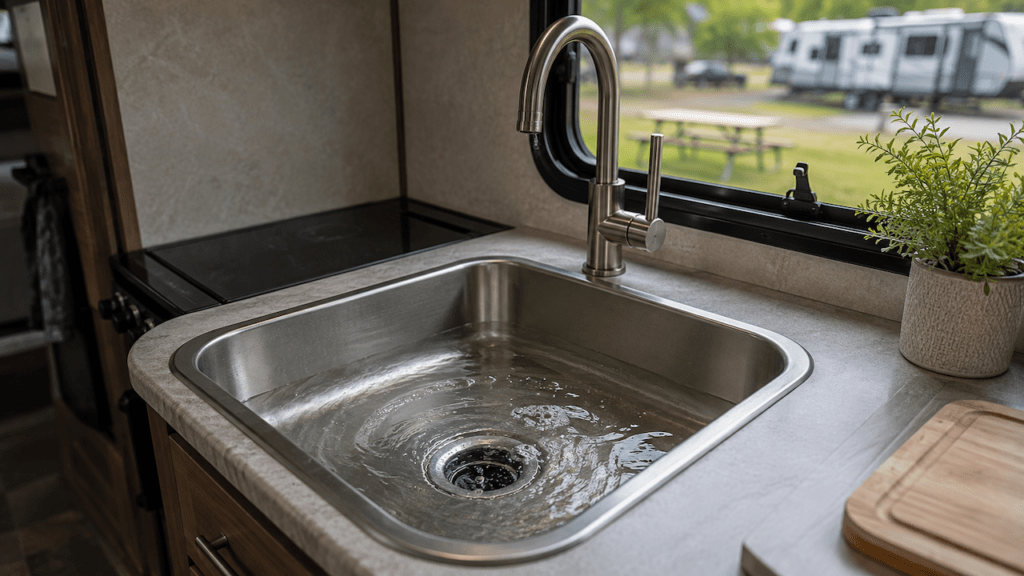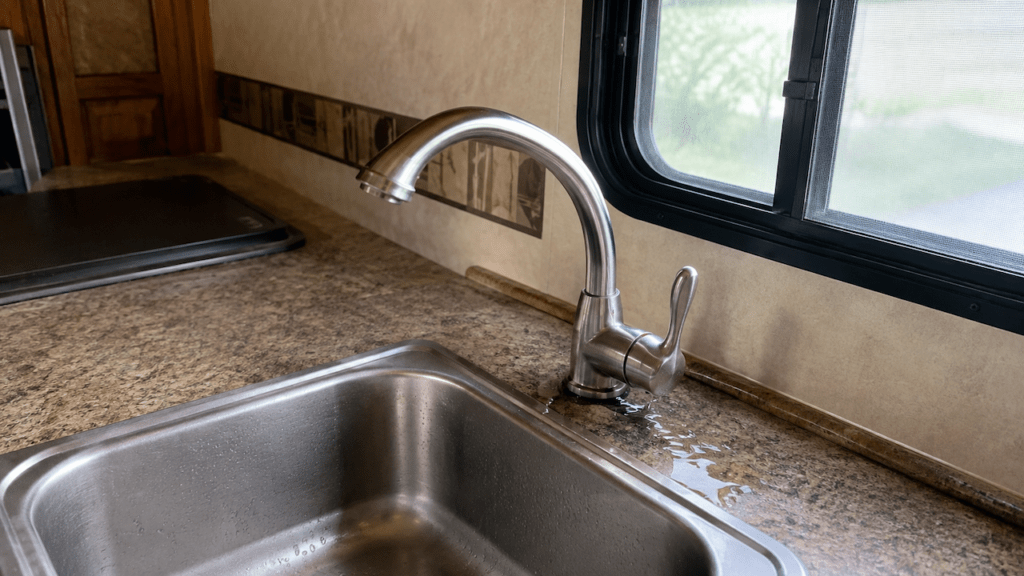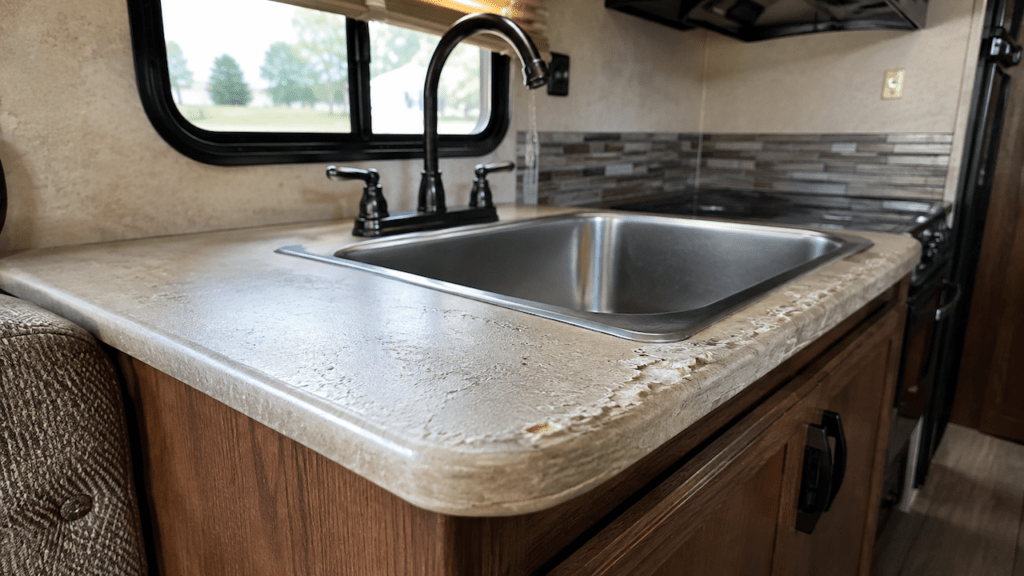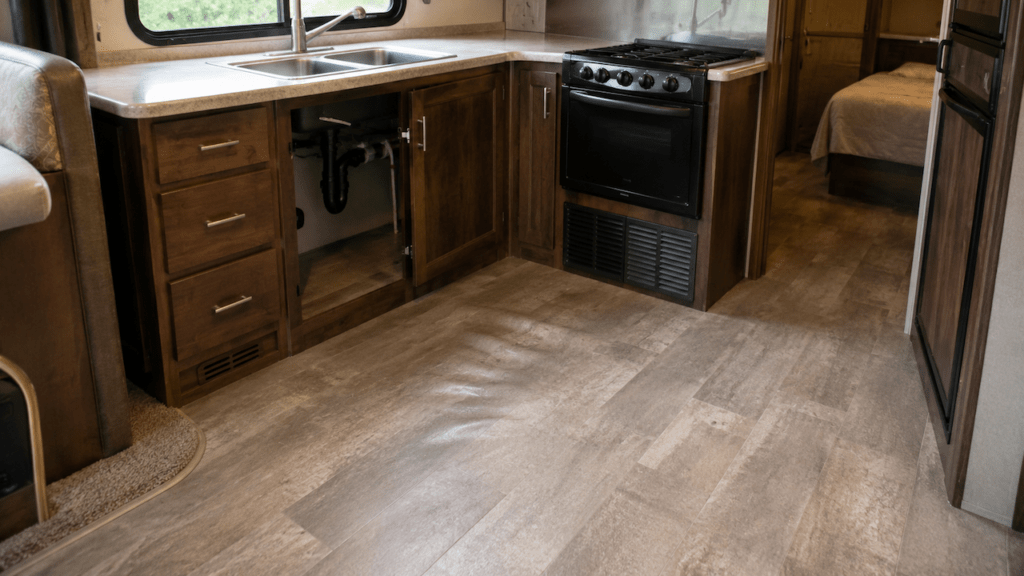
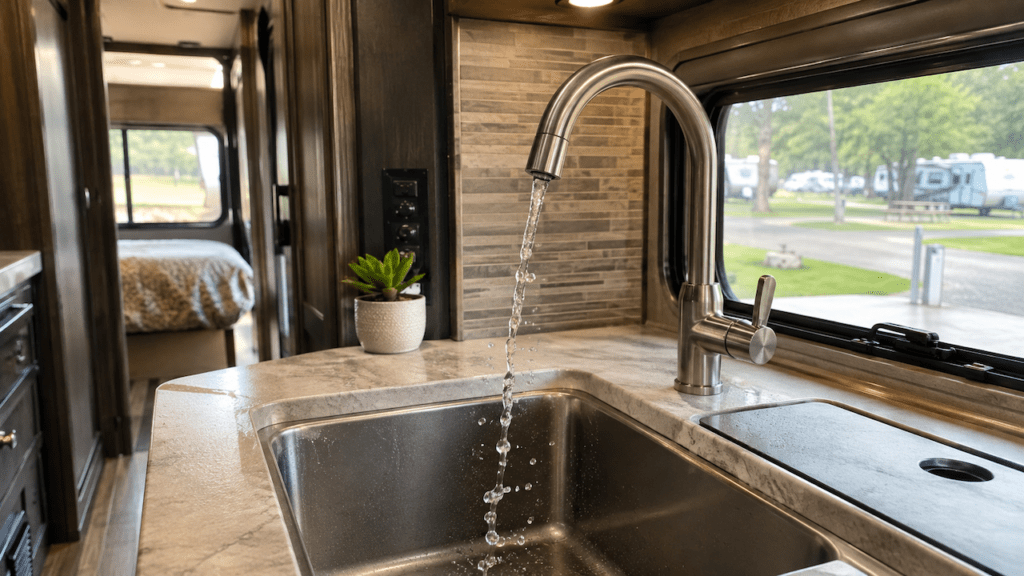
Your RV kitchen faucet usually sputters after connecting to city water because trapped air is being pushed through the plumbing. Air may remain inside the hose, water lines, or water heater after draining, storage, or disconnection. The sputtering should usually stop once that air works its way out.
If the faucet keeps spitting after several minutes, something else needs attention. I’ll help you narrow it down by checking the easiest causes first, including the aerator, water heater, regulator, filter, and city-water connection.
Key Takeaways
- Brief sputtering after connecting to city water is usually normal.
- Trapped air is the most common cause after hookup.
- Hot-only sputtering often points toward the water heater system.
- Kitchen-only sputtering usually suggests an aerator or faucet problem.
- Whole-RV sputtering can indicate supply, filter, or regulator issues.
- Your water pump normally stays off while using city water.
- Persistent sputtering deserves further troubleshooting instead of continuous flushing.
Why Does My RV Kitchen Faucet Sputter on City Water?
City water enters your RV already under pressure. That pressure pushes water through plumbing lines that may still contain air.
Those air pockets have to escape somewhere. When they reach your kitchen faucet, they create bursts, popping sounds, and uneven flow.
This is especially common after your RV has been drained. You may also notice it after winterization, repairs, or campground setup.
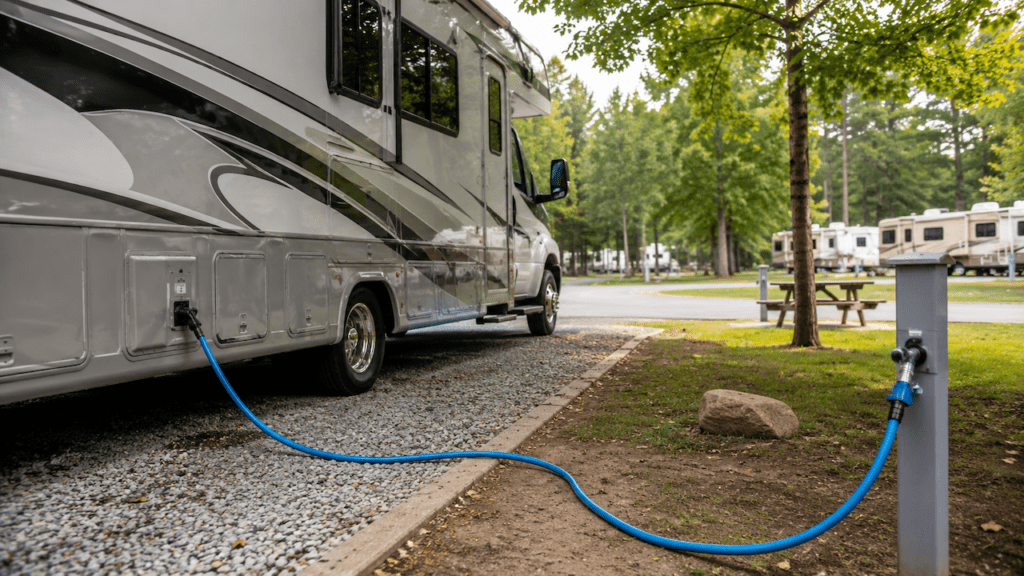
The fresh-water hose itself can contain air as well. If you connect an empty hose directly to your RV, that air enters the system first.
In most cases, the problem is temporary. Once water replaces the trapped air, the stream becomes steady again.
Is It Normal for an RV Faucet to Sputter After Connecting to City Water?
Yes, a small amount of sputtering immediately after connecting is usually normal. It simply means air is leaving the plumbing system.
You may notice more sputtering after winter storage or plumbing maintenance. It can also happen after draining the water heater or changing filters.
The important thing is how long the sputtering continues. Normal trapped air should gradually decrease as the lines fill.
If it keeps returning after you already purged everything, start checking for another cause.
What Causes an RV Kitchen Faucet to Keep Sputtering on City Water?
Several problems can produce similar symptoms, but they do not all affect the RV in the same way. Pay attention to whether the sputtering affects one faucet, both hot and cold water, or every fixture.
Trapped Air in the Cold-Water Lines
Cold-water lines often trap air when the RV sits empty. Connecting city water suddenly pressurizes those dry sections.
The water pushes air toward the nearest open fixture. That produces short bursts before the flow becomes steady.
Usually, running the cold faucet for a short period solves it.
Air Remaining in the Hot-Water Lines
The hot-water plumbing can hold even more air than the cold side. This is especially true when the water heater was recently drained.
You may hear stronger spitting from the hot faucet at first. The flow should smooth out as the heater and lines refill.
If only hot water sputters, focus your troubleshooting there first.
The RV Water Heater Is Refilling
A drained tank-style water heater contains a large volume of air. City water must push that air out while the tank refills.
That displaced air travels through your hot-water plumbing. It eventually escapes through an open faucet.
Keep the water heater turned off while it refills. You should never intentionally heat an empty tank.
Once you get a steady hot-side water flow, normal operation can resume.
A tank-style heater may still maintain an internal expansion air pocket. You do not need to eliminate every bit of air inside the heater itself.
The Water Heater Bypass Valves Are Still in Winterization Position
Incorrect bypass settings can cause unusual flow after dewinterizing. They may also prevent the heater from filling normally.
This can create weak flow, sputtering, or inconsistent hot-water delivery.
Check the valve diagram for your specific RV. Different RV plumbing layouts use different valve arrangements.
Return the system to its normal operating configuration before testing again.
A Clogged Kitchen Faucet Aerator
The aerator is the small screen at the faucet outlet. It controls the stream and catches small particles.
Sediment, mineral deposits, or debris can clog those tiny passages. Water then escapes unevenly and may look like sputtering.
This becomes especially likely when only the kitchen faucet acts strangely.
Remove the aerator and test the faucet briefly without it. If the flow becomes smooth, you found the restriction.
Debris Inside the Faucet Cartridge
If the aerator is clean, the faucet cartridge may be restricted. Small particles sometimes move through the plumbing after hookup.
Those particles can become lodged inside the faucet valve assembly. The result may be uneven flow or poor pressure.
A cartridge issue is more likely when one faucet misbehaves. Other RV fixtures usually continue working normally.
A Dirty or Restricted RV Water Filter
An old water filter can restrict overall flow significantly. Campground water may carry enough sediment to load a filter quickly.
A badly restricted filter can cause weak or uneven water delivery. You may notice the problem at several fixtures.
If your filter looks dirty or has been used extensively, replace it. Then test the system again.
A Restricted or Faulty Water Pressure Regulator
Your regulator protects RV plumbing from excessive campground pressure. However, a damaged or restricted regulator can also reduce flow.
A regulator generally does not create trapped air by itself. Instead, it may cause unstable or restricted water delivery.
If every faucet feels weak or irregular, inspect the regulator. Testing temporarily with another known-good regulator can help isolate the issue.
Campground Water Pressure Is Fluctuating
Sometimes the problem is outside your RV entirely. Campground pressure can change throughout the day.
High demand from other campers may reduce available pressure. Aging campground plumbing may also create inconsistent flow.
If several fixtures surge together, check the campground spigot. A steady spigot usually points back toward your RV system.
The City-Water Inlet or Valve Is Restricted
Your city-water inlet may include a screen or check valve. Debris can partially restrict these components.
A damaged inlet valve can also create unusual flow behavior.
Inspect the inlet screen whenever whole-RV flow suddenly becomes weak. Cleaning a small screen can sometimes solve a surprisingly large problem.
What Does the Sputtering Pattern Tell You?
The location of the sputtering gives you valuable clues. Before taking anything apart, compare what happens at other faucets.
| What You Notice | Most Likely Area to Check | First Thing to Do |
| Brief sputtering after hookup | Trapped air | Purge hot and cold lines |
| Every faucet sputters | Main supply or trapped air | Purge fixtures and inspect hookup |
| Hot water sputters only | Water heater or hot plumbing | Confirm heater filling and bypass position |
| Cold water sputters only | Cold line or supply restriction | Purge cold lines and inspect supply |
| Kitchen faucet only | Aerator or faucet cartridge | Remove and clean aerator |
| Flow improves without aerator | Clogged aerator | Clean or replace aerator |
| Every fixture has weak flow | Filter, regulator, or campground supply | Inspect upstream components |
| Sputtering returns after purging | Ongoing plumbing or supply issue | Continue systematic troubleshooting |
| Fresh tank fills on city water | Pump check valve problem | Inspect pump and check valve |
This pattern-based approach saves time. It keeps you from replacing parts that are probably working fine.
How Do You Stop an RV Kitchen Faucet From Sputtering After City-Water Hookup?
Start with the easiest checks and move gradually toward deeper troubleshooting. In most cases, you will find the problem before reaching complicated plumbing work.
1. Turn the RV Water Pump Off
Your city-water connection normally provides its own pressure. The onboard pump usually does not need to run.
Turn the pump off before troubleshooting. This helps you evaluate city-water performance by itself.
If the faucet works properly afterward, your pump system may have been complicating things.
2. Make Sure the RV Is Set to City-Water Mode
Some RVs use a simple dedicated connection. Others have multifunction water-management panels with several valve settings.
Make sure every valve matches normal city-water operation.
Do not guess based on another RV model. Check the labels or plumbing instructions for your setup.
3. Confirm the Water Heater Bypass Is Correct
This step matters especially after winterization.
Make sure water can actually enter the water heater. Incorrect bypass positions can create confusing symptoms.
Leave the heater turned off during this check.
4. Purge the Cold-Water Lines
Open the kitchen cold-water faucet first. Let it run until the stream becomes smooth.
Then check other cold-water fixtures inside the RV.
You can also run the bathroom sink, shower, and exterior shower. This helps remove air trapped in different branches.
Once every cold fixture runs steadily, move to the hot side.
5. Purge the Hot-Water Lines
Open a hot-water faucet while the heater remains off.
You may hear air escaping for a while. That is normal when the heater was recently drained.
Keep the faucet open until you get a steady stream.
Repeat the process at other hot-water fixtures if necessary.
6. Remove and Clean the Kitchen Faucet Aerator
If only the kitchen faucet sputters, inspect the aerator next.
- Turn the faucet off.
- Unscrew the aerator carefully.
- Remove the screen and internal pieces.
- Rinse away loose sediment.
- Clean visible mineral buildup.
- Test the faucet briefly without the aerator.
- Reassemble everything in the correct order.
If the faucet runs perfectly without the aerator, the problem is localized.
Replacing an inexpensive aerator is often easier than repeatedly cleaning a damaged one.
7. Inspect the Water Filter and Regulator
Now check the components between the campground spigot and RV.
Look for a dirty filter, kinked hose, or damaged regulator.
If possible, test components one at a time. That helps identify which part is restricting flow.
Do not permanently remove pressure protection just to increase flow.
8. Test the Campground Supply
Disconnect your hose from the RV and carefully test the campground spigot.
You are looking for a steady water stream.
If the spigot itself surges or loses pressure, your RV may be fine.
If the spigot remains steady, continue checking your RV connection.
How Long Should an RV Faucet Sputter After Connecting to City Water?
Minor trapped air should clear fairly quickly. A completely drained RV may take longer because more plumbing must refill.
A drained tank-style water heater can increase the purge time noticeably.
The sputtering should gradually reduce while water runs. The stream should become more consistent instead of remaining equally violent.
If it continues for several minutes after all fixtures are purged, investigate further.
You should also troubleshoot if it disappears and quickly returns.
Why Does My RV Faucet Sputter Only on Hot Water?
Hot-only sputtering narrows your search considerably. In most cases, the issue is connected to the water heater or hot-water plumbing.
The Water Heater Is Still Filling
This is common after draining or winter storage.
As the heater fills, displaced air travels toward your faucets. The hot side may spit until that air clears.
Make sure the heater is completely supplied with water before heating it.
Air Is Trapped in the Hot-Water Plumbing
Air can remain inside high points or branches in the hot lines.
Open each hot-water fixture until the flow becomes steady.
You may need to purge more than just the kitchen faucet.
The Water Heater Bypass Is Incorrectly Set
A partially incorrect bypass configuration can disrupt heater filling.
Check your valve positions carefully after dewinterization.
If you changed them recently, this is one of the first things I would inspect.
Water-Heater Flow Is Restricted
Sediment or debris can also restrict water moving through the heater system.
Tankless systems can be particularly sensitive to reduced flow.
If sputtering comes with poor hot-water performance, inspect filters, screens, and related components.
Why Does Only My RV Kitchen Faucet Sputter?
When every other fixture works properly, focus on the kitchen faucet itself. A whole-RV plumbing failure becomes much less likely.
Check the Aerator First
The aerator is the easiest thing to inspect.
Remove it and run the faucet briefly.
If the sputtering disappears, clean or replace the aerator.
Check the Faucet Cartridge
If removing the aerator changes nothing, the cartridge may be restricted.
Debris can collect inside the valve and disturb the stream.
Replacement procedures vary between faucet models.
Check the Kitchen Faucet Supply Lines
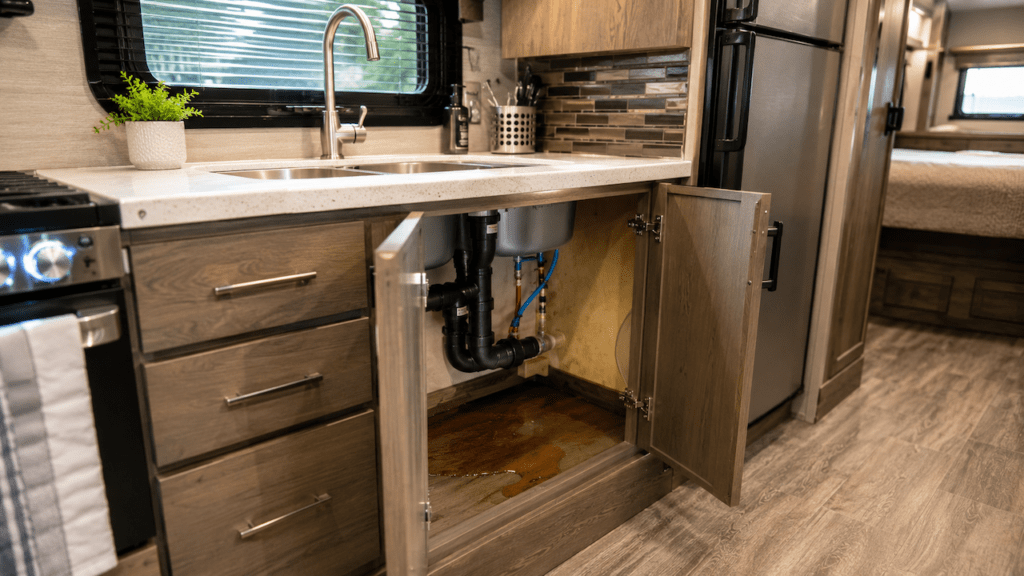
Look underneath the sink for kinked flexible lines.
Also check any shutoff valves if your RV has them.
A partially restricted supply line can cause poor local flow.
If every other fixture works normally, avoid replacing the water pump first. The problem is probably closer to the kitchen faucet.
Can High or Low City-Water Pressure Make an RV Faucet Sputter?
Pressure problems can cause surging, weak flow, or rapidly changing water delivery. They do not always create true air sputtering.
A pressure regulator is still important for protecting your RV plumbing.
Watch for these clues:
- Several fixtures surge at the same time.
- Water pressure changes suddenly during campground peak hours.
- Flow feels weak throughout the entire RV.
- Pressure improves when campground usage decreases.
- The problem changes after replacing the regulator.
Your RV manufacturer may specify an acceptable water-pressure range. Follow that guidance instead of assuming every RV is identical.
If campground pressure seems unusually high, do not bypass your regulator permanently.
Should My RV Water Pump Be On While Connected to City Water?
Normally, no. A standard city-water connection provides pressure directly to your RV plumbing.
Your onboard pump is mainly used when drawing from the freshwater tank.
Leaving the pump off also makes troubleshooting easier. You can determine whether city water alone works correctly.
Some RVs use more complicated water systems, so follow your owner’s instructions when needed.
Can a Bad RV Check Valve Cause Faucet Sputtering?
Check valves can create plumbing problems, but their symptoms vary depending on location. They should not be your first suspect for ordinary startup sputtering.
City-Water Inlet Check Valve Problems
The city-water inlet normally prevents water from flowing backward through the connection.
A damaged or restricted valve can reduce flow. It may also create unusual behavior near the inlet.
Inspect it after simpler causes have been eliminated.
Water-Pump Check Valve Problems
The pump check valve keeps pressurized city water from flowing backward through the pump.
A common clue is your freshwater tank filling unexpectedly while connected to city water.
If that happens, the pump or its internal check valve deserves attention.
That symptom is much more meaningful than brief faucet sputtering alone.
Why Does the Faucet Sputter on the Water Pump but Not on City Water?
This changes the diagnosis significantly.
If city water produces smooth flow but pump operation creates sputtering, inspect the suction side of your pump system.
Possible causes include a low freshwater tank, loose fitting, strainer seal, winterization valve, or damaged pickup hose.
Those components can allow air to enter before water reaches the pump.
Because this problem occurs only in pump mode, the city-water plumbing becomes less suspicious.
When Is RV Faucet Sputtering No Longer Normal?
Brief startup sputtering is usually harmless. Persistent or returning sputtering means you should investigate further.
Watch for these warning signs:
- Sputtering repeatedly returns after you purge the lines.
- Every faucet continuously spits air.
- Water pressure suddenly drops throughout the RV.
- The kitchen faucet sputters for an extended period.
- Campground flow is strong but RV flow remains weak.
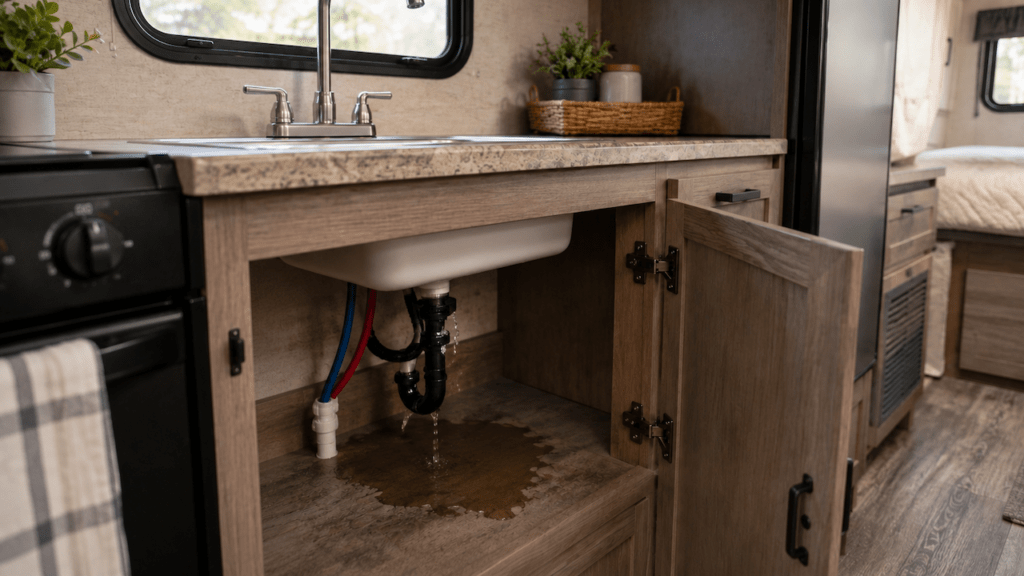
- Water appears underneath cabinets or beneath the RV.
- Your freshwater tank fills during city-water use.
- Hot water repeatedly spits large amounts of air.
- Water contains sediment or unusual discoloration.
- The water heater refuses to fill normally.
These symptoms do not automatically mean something serious has failed. They simply tell you normal trapped air is probably not the entire story.
How Can You Prevent Faucet Sputtering at the Next Campground?
A few simple hookup habits can reduce air and prevent unnecessary troubleshooting. They also help protect your RV plumbing from campground water problems.
- Use a clean potable-water hose.
- Flush the hose briefly before connecting it.
- Install an appropriate RV water-pressure regulator.
- Use a suitable water filter when needed.
- Keep campground connection fittings clean.
- Purge the plumbing after long storage.
- Check water-heater bypass valves after winterization.
- Clean faucet aerators periodically.
- Replace heavily restricted water filters.
- Keep the water pump off during normal city-water use.
- Inspect the hose for kinks before troubleshooting deeper problems.
Flushing the hose before connection is especially useful. It removes trapped air, stale water, and loose debris before they enter your RV.
Final Verdict
If your RV kitchen faucet sputters briefly after connecting to city water, trapped air is usually the reason. Purge the cold and hot lines, confirm the water heater is filling properly, and give the system a moment to stabilize.
If the sputtering continues, use the pattern to guide your next move. Kitchen-only sputtering usually points to the aerator or faucet. Hot-only sputtering points toward the water heater. Whole-RV sputtering suggests the city-water supply, filter, regulator, or main plumbing.
And if the faucet works perfectly on city water but sputters with the pump, switch your attention to the freshwater tank and pump suction side. That simple distinction can save you plenty of unnecessary parts and frustration.
Related FAQs
Is It Normal for an RV Faucet to Sputter When First Connected to City Water?
Yes. Brief sputtering is usually trapped air leaving the hose and plumbing lines. It should gradually disappear once the system becomes fully pressurized.
How Do I Get Air Out of My RV Water Lines?
Connect the water supply and open cold-water fixtures until they flow steadily. Then repeat the process with hot-water fixtures while the water heater remains switched off.
Why Does My RV Hot-Water Faucet Keep Sputtering?
Hot-only sputtering often means the water heater is still filling, trapped air remains in the hot lines, or the bypass valves are incorrectly positioned.
Should I Turn My RV Water Pump Off on City Water?
Yes, in most standard RV systems. City water supplies its own pressure, so the onboard pump normally remains off until you use the freshwater tank.
Can a Clogged Aerator Make an RV Faucet Sputter?
Yes. Mineral deposits or debris can restrict the aerator and create an uneven stream that looks similar to air sputtering.
Can an RV Water Pressure Regulator Cause Uneven Water Flow?
A clogged, damaged, or overly restrictive regulator can reduce or destabilize flow. However, it usually does not introduce actual air into the plumbing.
Why Does My RV Faucet Sputter on City Water but Work Normally With the Pump?
That pattern suggests the issue is likely in the city-water path. Check the campground supply, regulator, filter, hose, inlet, and valve settings.
Why Is My Freshwater Tank Filling While Connected to City Water?
City water entering the freshwater tank often points toward a leaking water-pump check valve or an incorrectly positioned water-management valve.
Can Air in RV Water Lines Damage the Plumbing?
Small amounts of trapped air during normal hookup are usually harmless. Persistent air combined with severe pressure changes or plumbing faults should be investigated.
Do I Need to Purge RV Water Lines Every Time I Connect to City Water?
Not always. However, a brief purge is helpful after storage, draining, winterization, filter changes, or any situation where air may have entered the plumbing.

Gregory Allen covers outdoor RV camping, essential gear, and travel preparation. His reviews are based on real conditions, not spec sheets alone. He helps RVers choose equipment that works reliably in everyday outdoor use.